


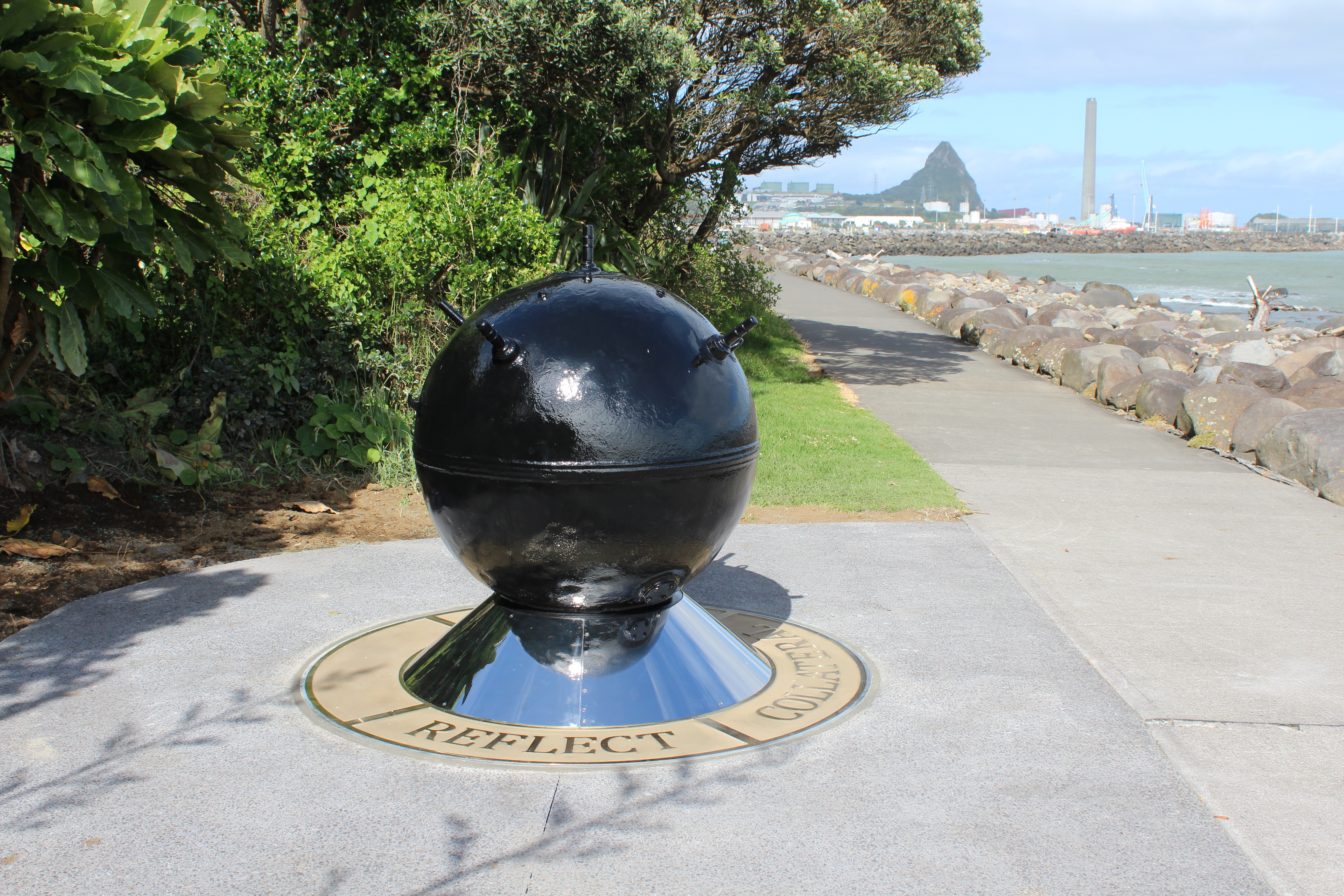
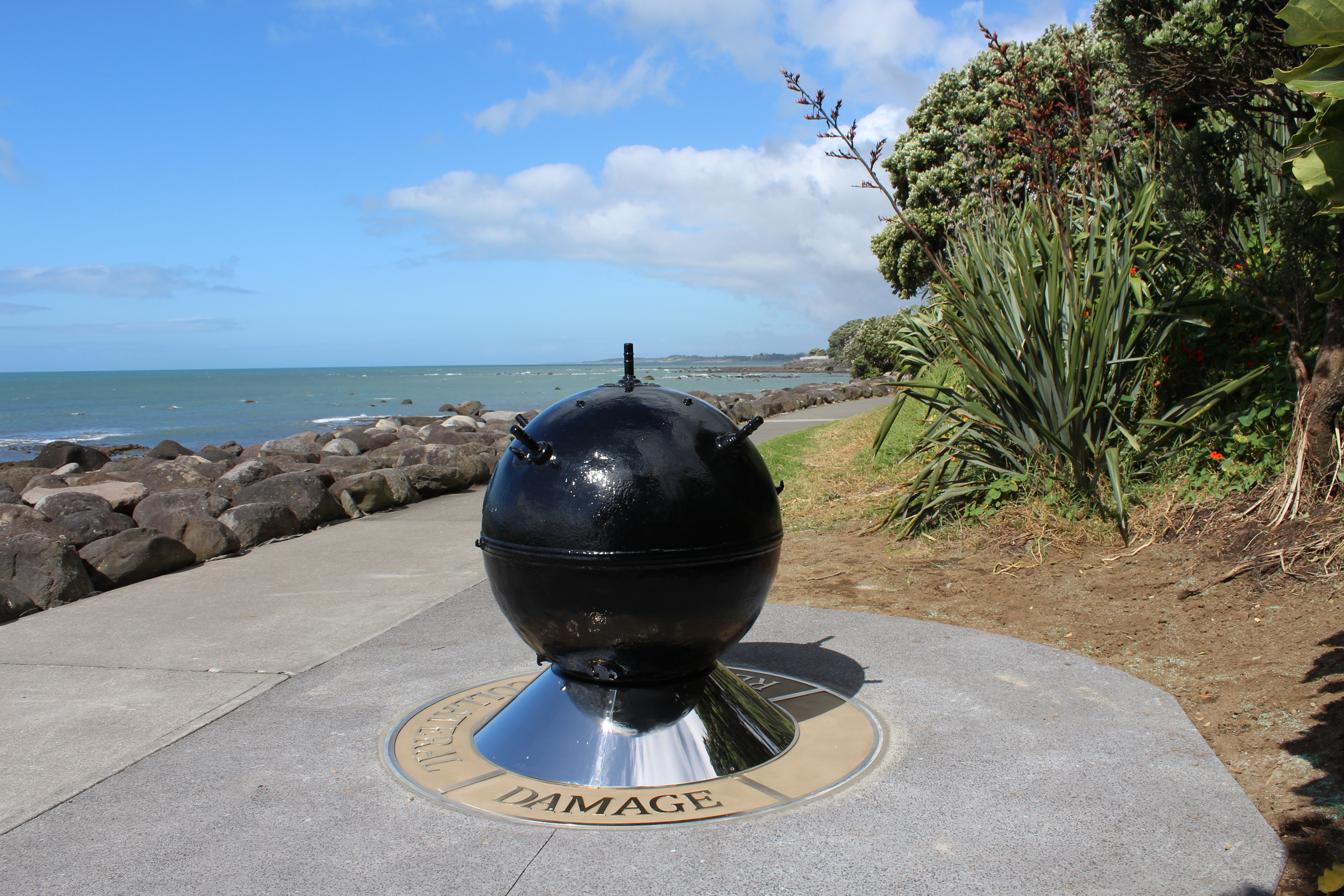
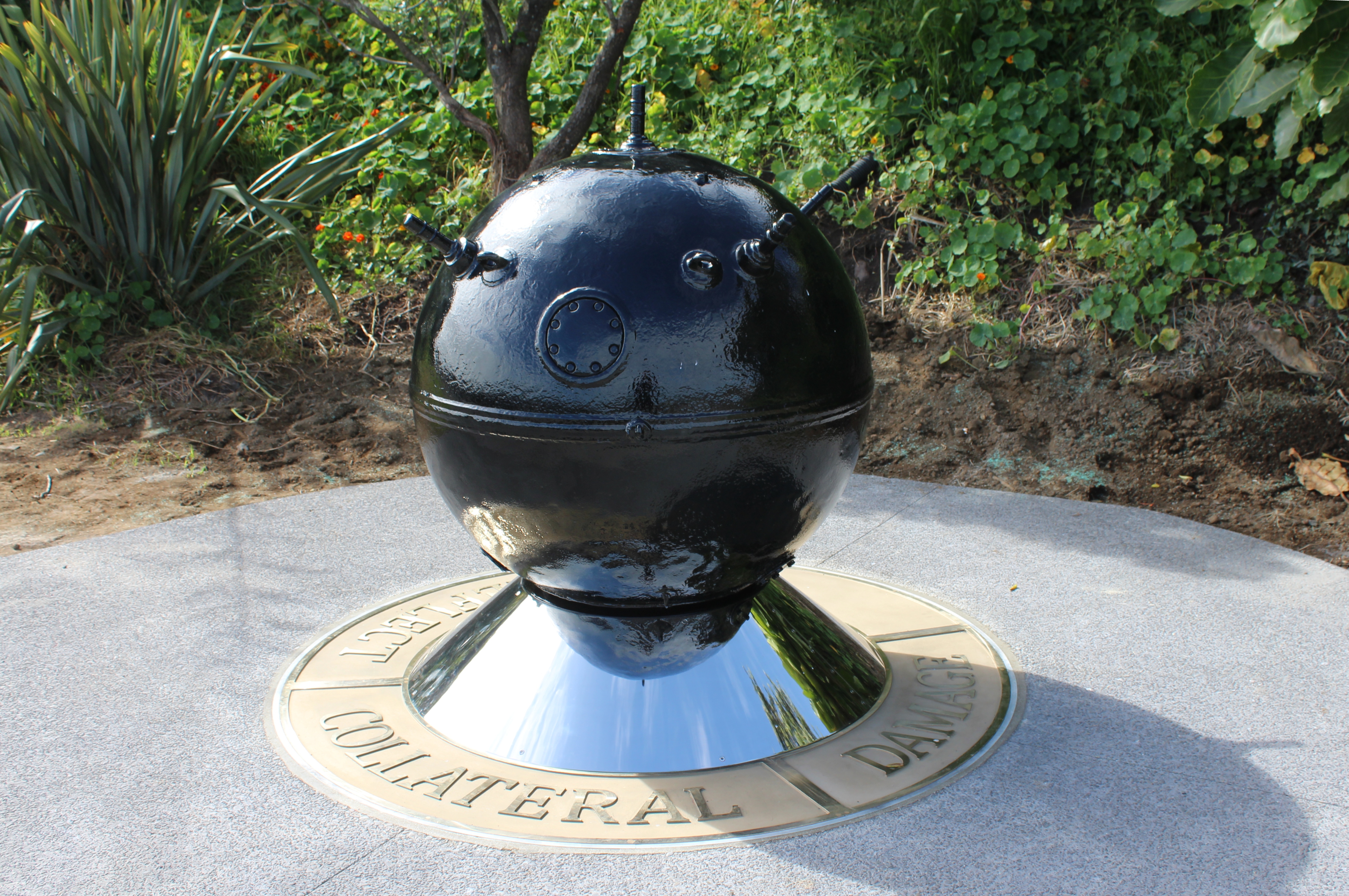
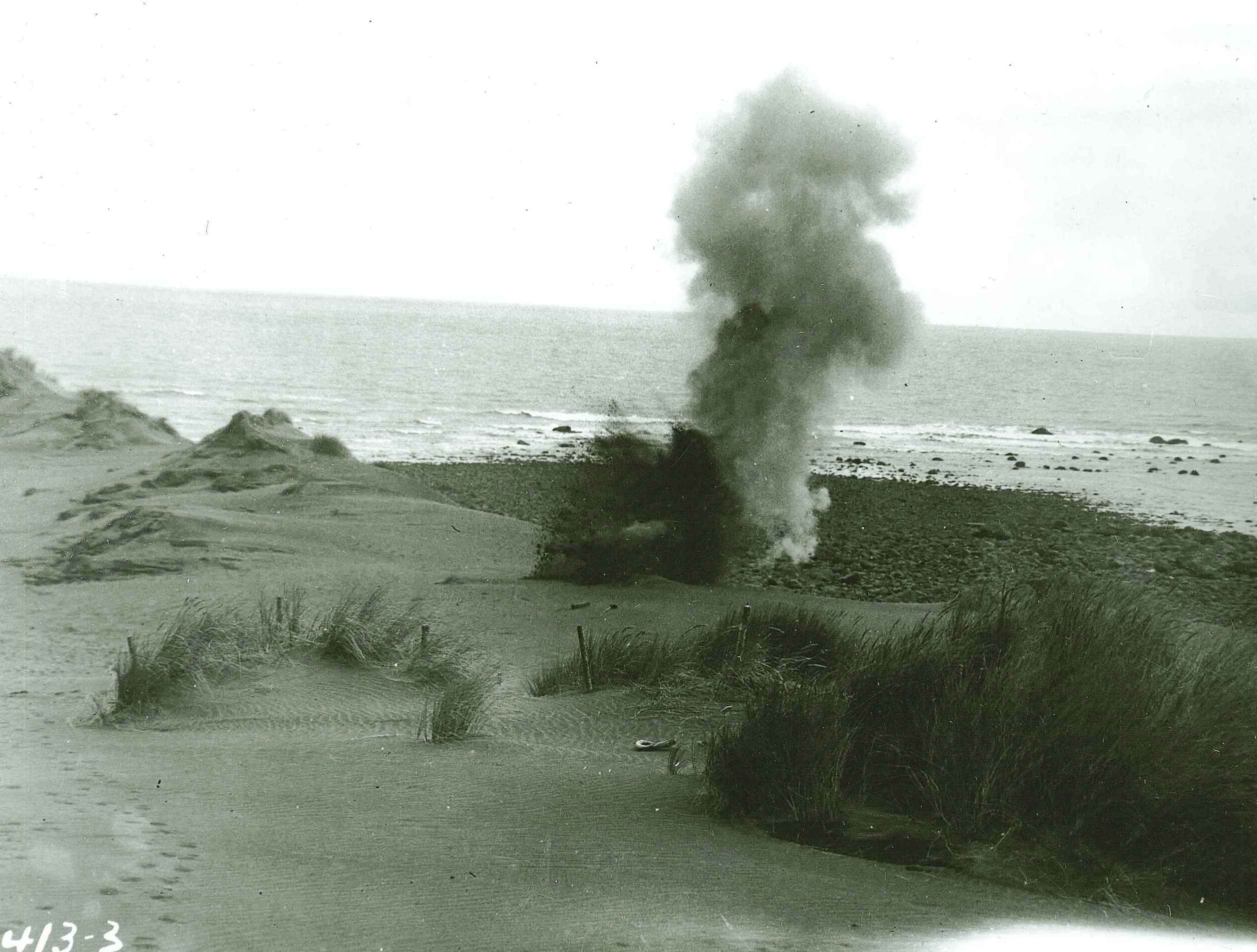
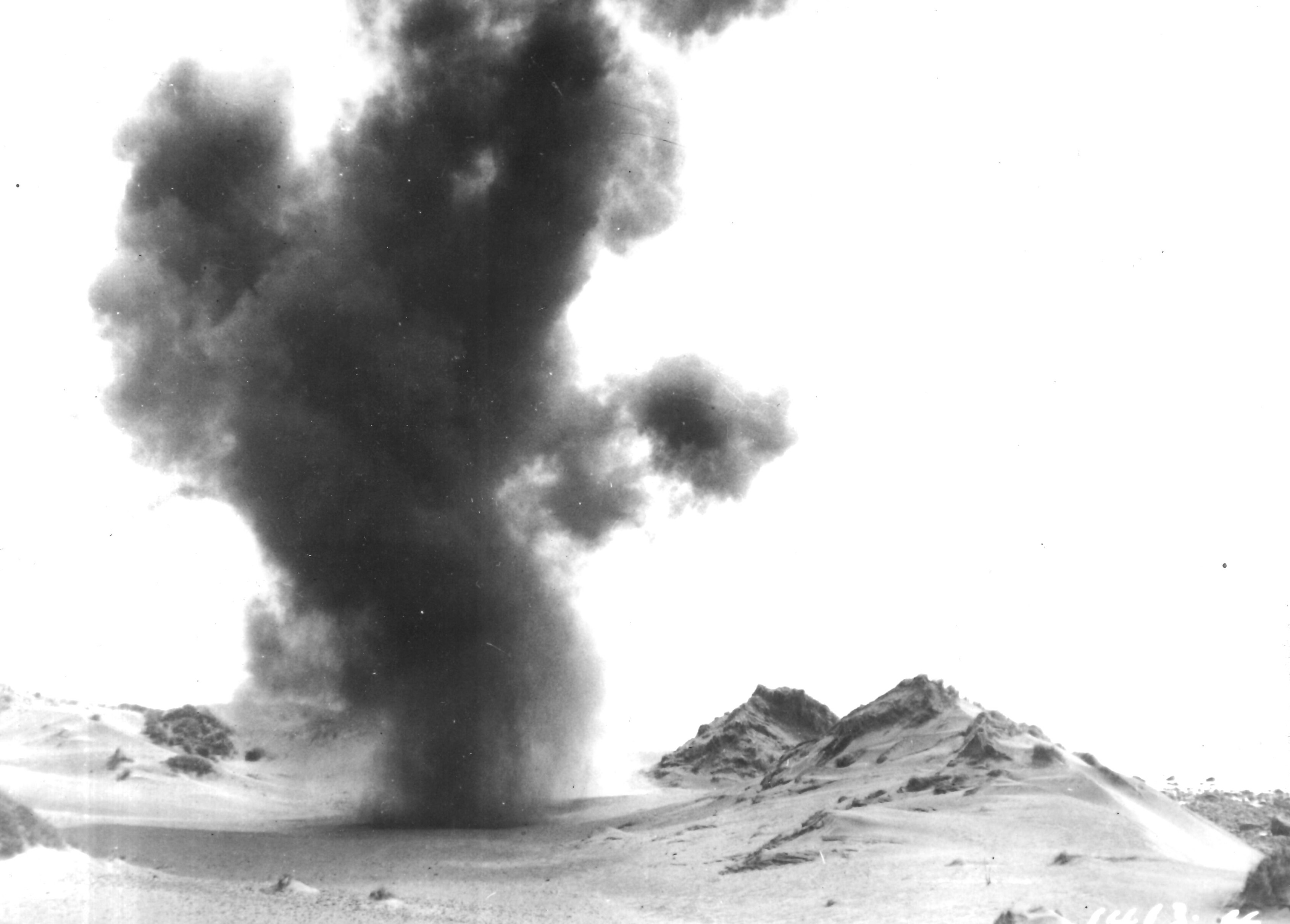
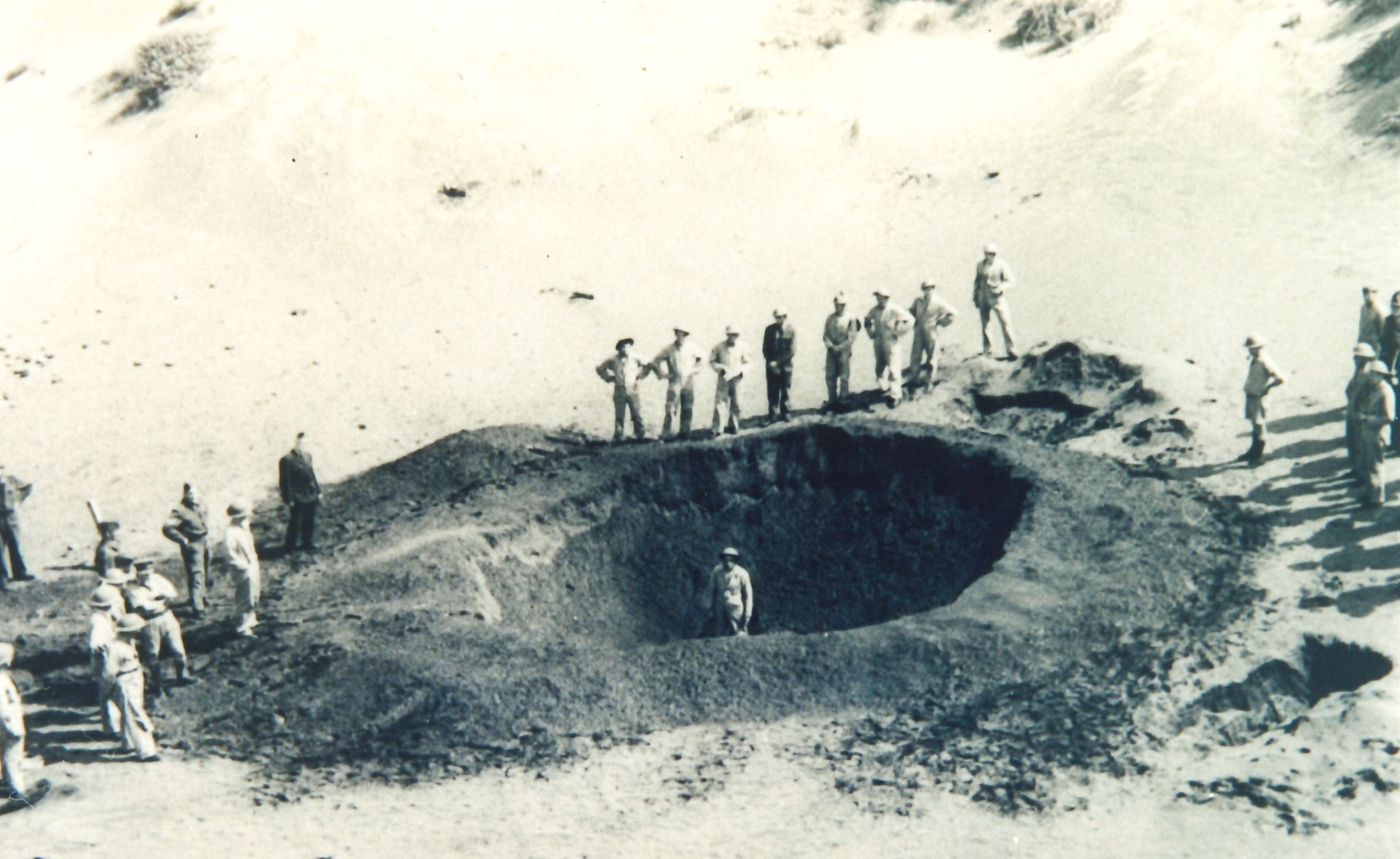
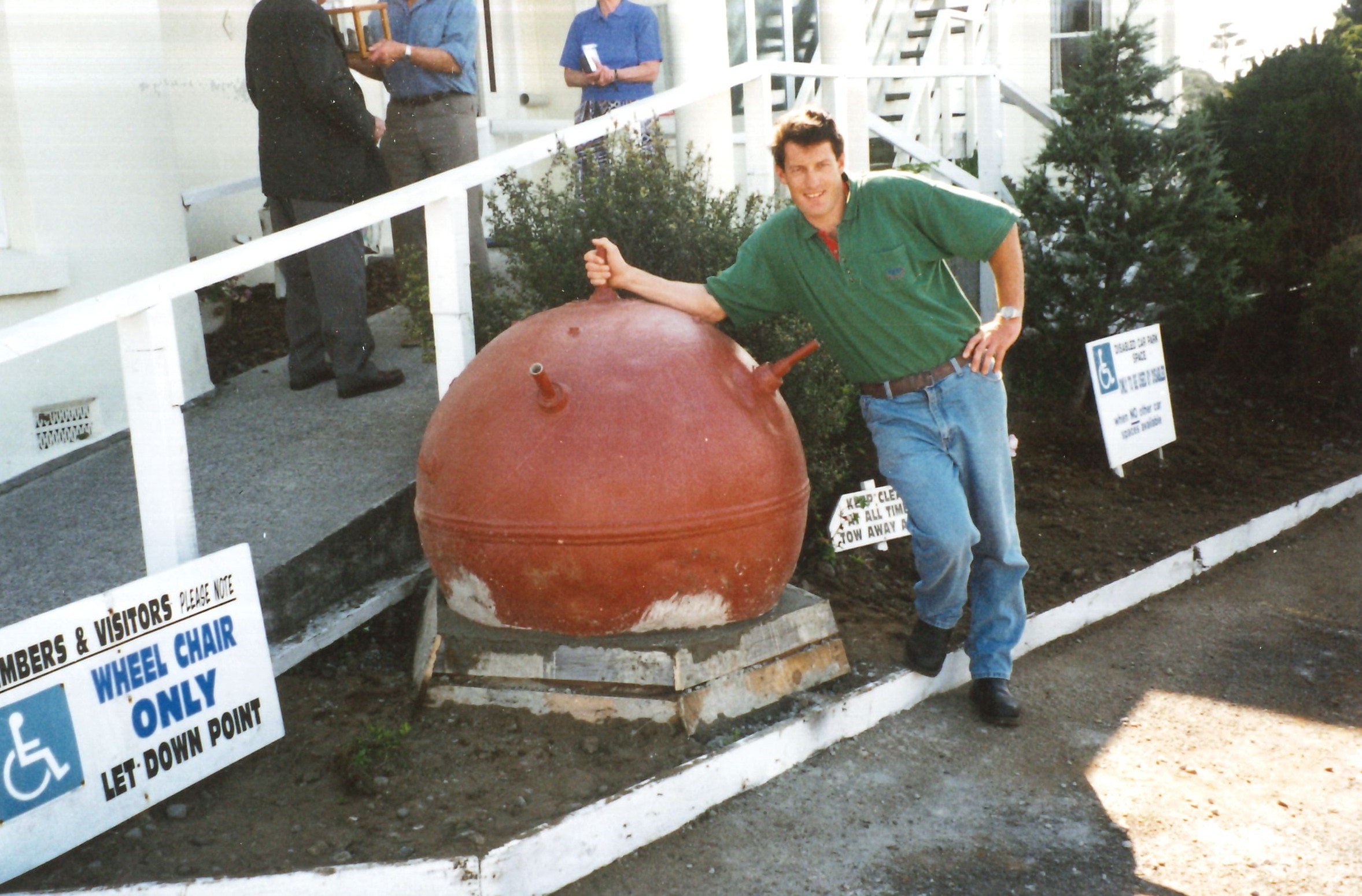
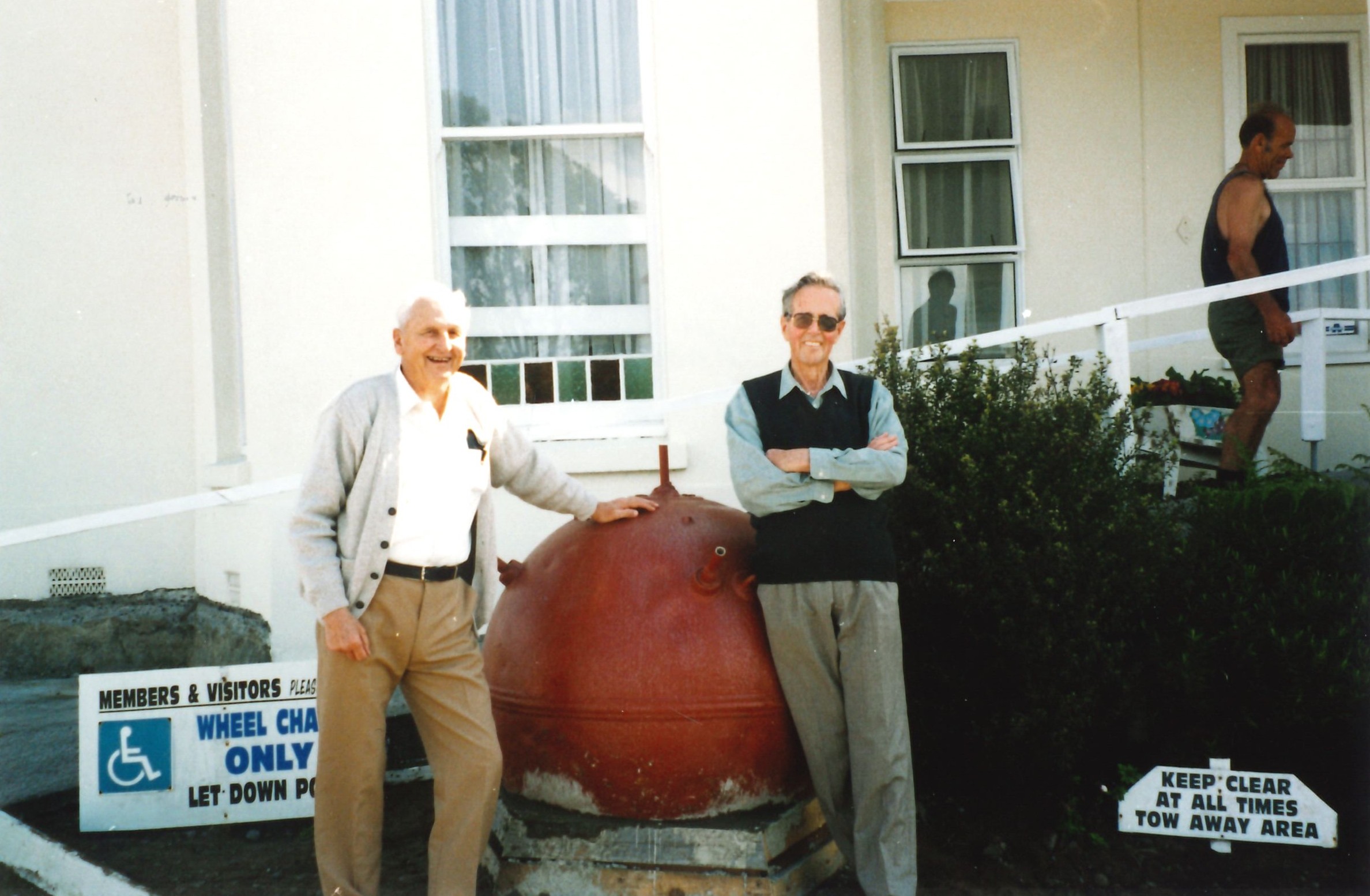
This German anti-shipping mine washed ashore at Belt Road, New Plymouth on 15 February 1943. It was thought to be one of a number laid off the south Australian coast by the German Navy during the Second World War.
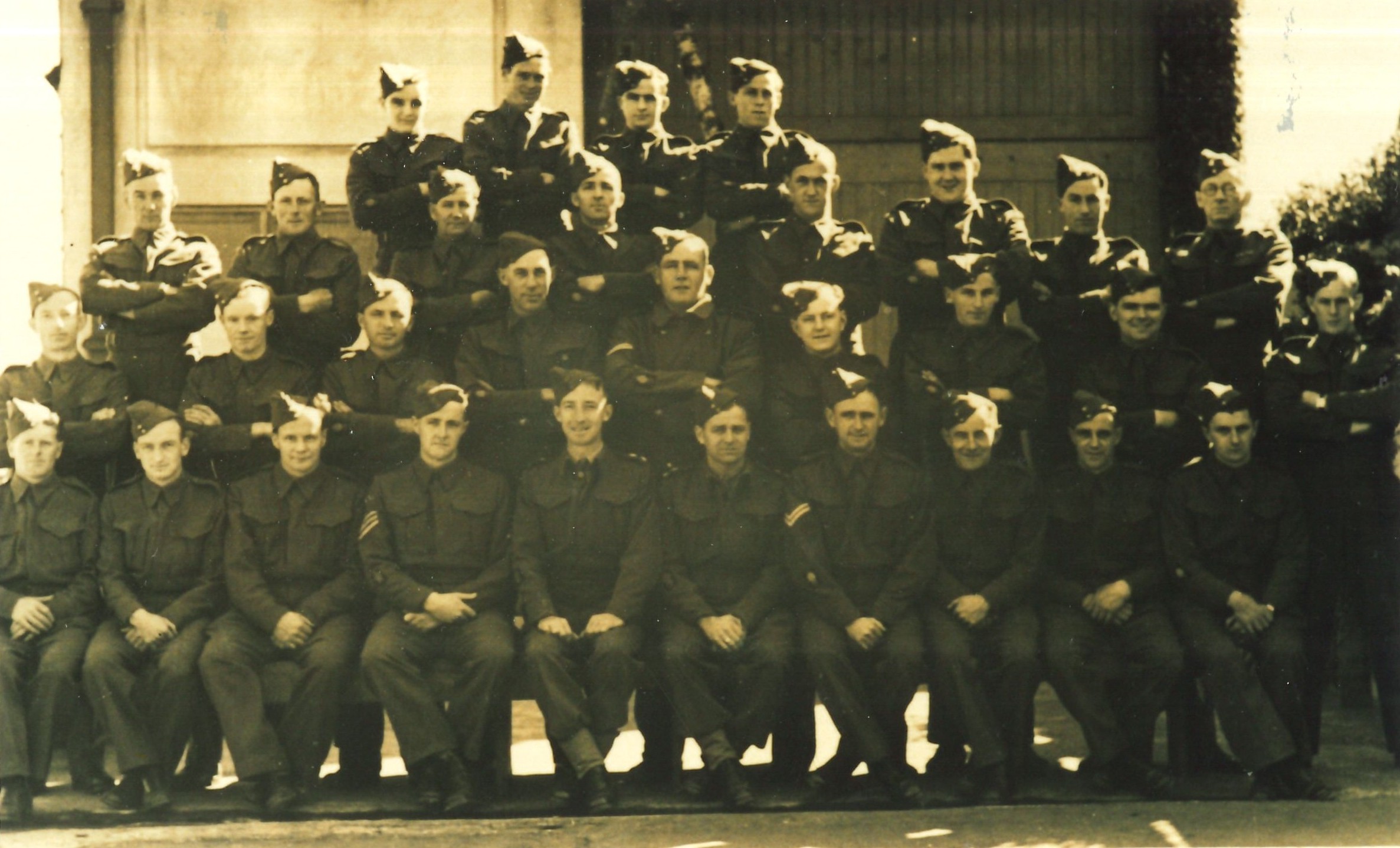
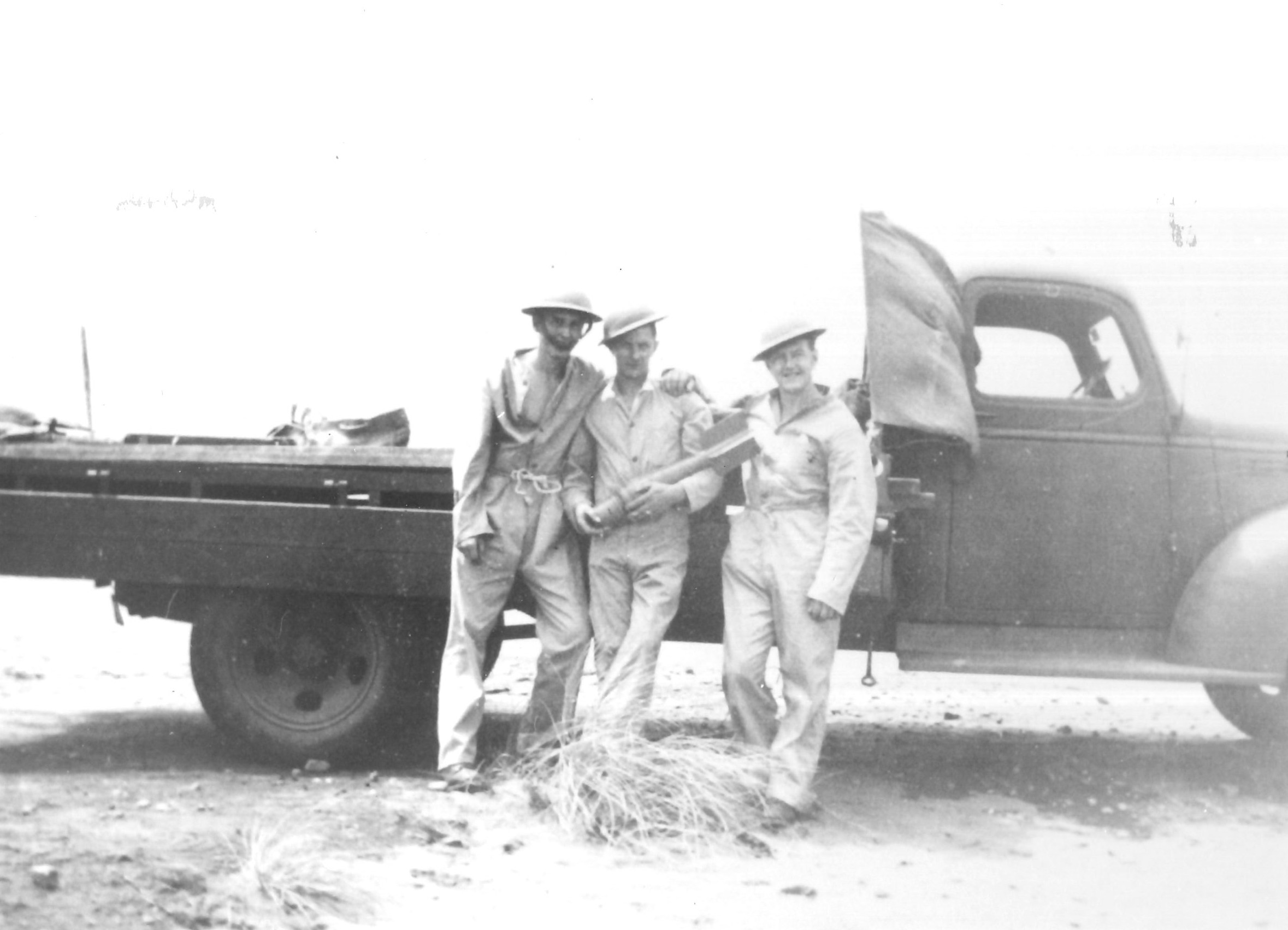
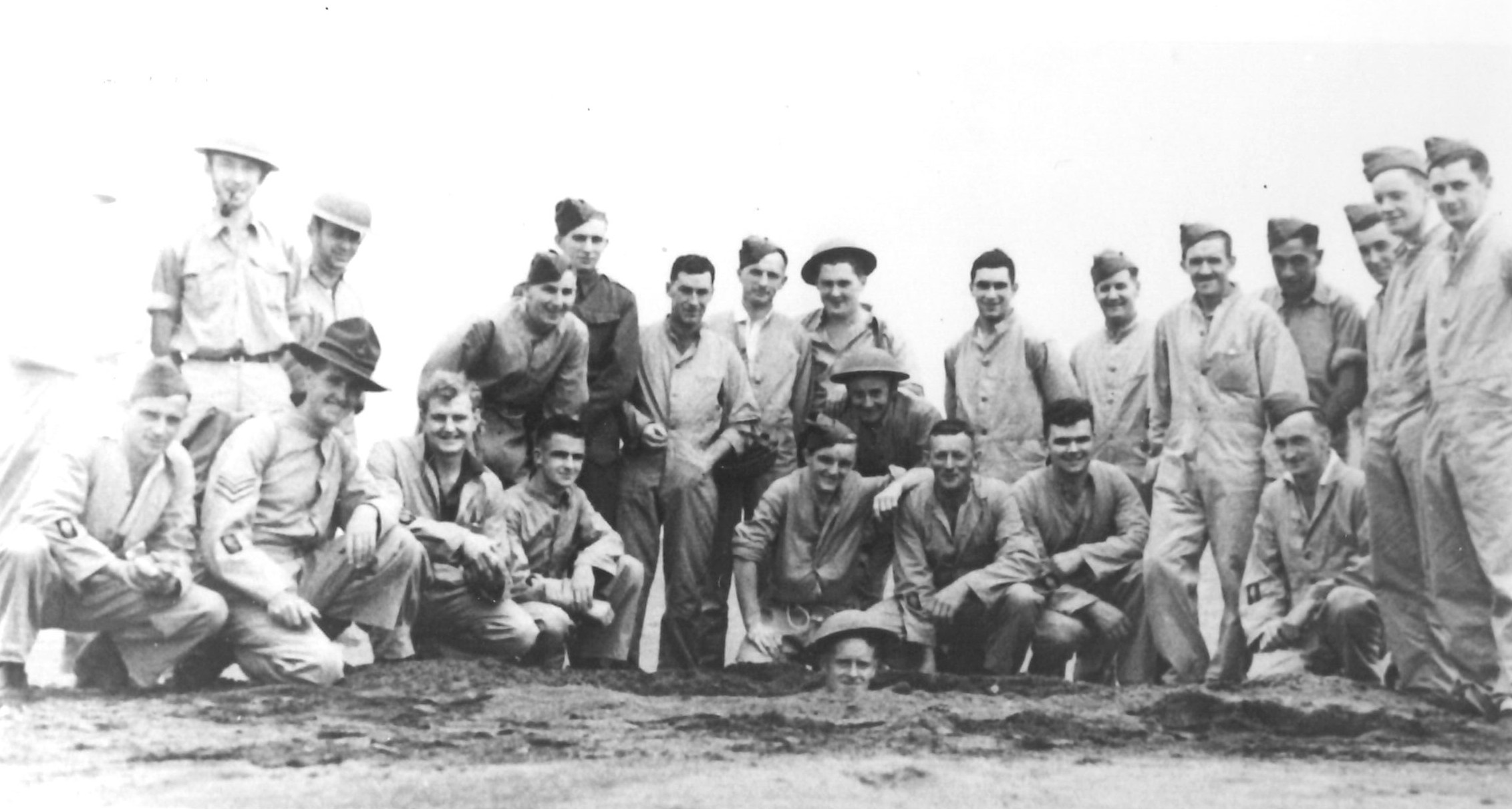
The mine was recovered, towed back out to sea then north to the beach at Waiwhakaiho where it was defused by New Plymouth's 2C Section Bomb Disposal Group, part of the NZ Engineering Corps. The operation was perilous as it could not be determined whether the mine’s mooring spindle was in (unarmed) or out (armed and ready to go off) so the men risked their lives to remove it and render it safe.
Cyril George Wood (1925-2006) was a member of the Group, which had been formed the year before in response to the activity of German raiders in the Southern Pacific and Indian Oceans and the bombing of Darwin by the Japanese in February 1942. Cyril’s father George had died in 1939, leaving him the eldest child in the family, so he lied about his age, saying he was a year older than he was, and joined the Bomb Disposal Group as a Sapper in June 1942. The officer in charge was Lieutenant Richard (Dick) Thomas Naylor (1911-1997). Cyril later wrote extensive notes about his service with the BDG based on a diary he kept at the time – his memories of dealing with the Belt Road Mine can be found below.
The mine was displayed for a time at the Waitara Marine Park but later recovered by gardener Michael Zeier from the Waitara Borough yard dump. After a stint as an ornament in Zeier's own garden, it was donated to the New Plymouth Returned and Services' Association (RSA) in 1999 and mounted outside their premises on Devon Street East. When the RSA moved in 2012 the mine was put into storage at Port Taranaki.
The port company restored the mine and, with the aid of the Art in Public Places Trust and Pace Engineering, arranged for its installation on the Coastal Walkway near where it first came ashore.
The mine was painted and used as a centrepiece for a public artwork called Reflect Collateral Damage by local artist Dale Copeland, which was positioned on the Coastal Walkway in December 2015.
It is a Type-EM naval moored contact mine similar to one displayed at Mōkau. They were probably both laid by the German naval ships Penguin and Passat near Melbourne or in Bass Strait in October or November 1940. Many such mines were swept but some broke their moorings and drifted west to New Zealand.
Three mines are known to have washed ashore on Taranaki beaches during World War Two – at Bell Block on 28 November 1942, in Mōkau on 2 December 1942 and this one below Belt Road. The Bomb Disposal Group disarmed all of them before being disbanded in November 1943.
Related documents:
Mine at Belt Road by Cyril George Wood (1997)
The Day WWII Touched New Plymouth (Daily News 14 February 1998)
Taranaki Wartime Memories as Mine Returns (Daily News 7 October 1999)
Explosive Artwork Lands on Coastal Walkway (Taranaki Daily News 15 December 2015)
The Story Behind the Art (North Taranaki Midweek 20 January 2016)
Great Guns: The Artillery Heritage of New Zealand by Peter Cooke and Ian Maxwell (2013).
LinkMokau War Memorial Mine (1942)
LinkArchives deposited by Cyril George Wood (collection of Puke Ariki ARC2002-10).
LinkNarrative by Mavis Naylor, wife of Lieutenant Richard Naylor (collection of Puke Ariki ARC2003-602).
Link2C Section Bomb Disposal Group archives (collection of Puke Ariki ARC2012-121).
LinkBelt Road mine horn (collection of Puke Ariki PA2016.007).
LinkBelt Road mine horn (collection of Puke Ariki PA2016.008).
LinkBelt Road mine detonator (collection of Puke Ariki PA2016.006).
LinkPlease do not reproduce these images without permission from Puke Ariki.
Contact us for more information or you can order images online here.
The information on this website is provided for general research and reference only. While we try to keep content accurate and current, we make no guarantees about its completeness or correctness. It should not be considered a replacement for a LIM or a Property Report. Some content is supplied by third parties. Puke Ariki has not verified this content and users should check its accuracy before relying on it.The inclusion of a building on the website does not imply heritage status. See SCHED1 in the NPDC District Plan for a list of buildings that have rules about what can happen to or around them (administered by NPDC). See the New Zealand Heritage List for a list of buildings that are celebrated for their heritage significance but are not subject to rules (administered by Heritage New Zealand Pouhere Taonga). Should any corrections need to be made to the records or for more information please contact us.


