


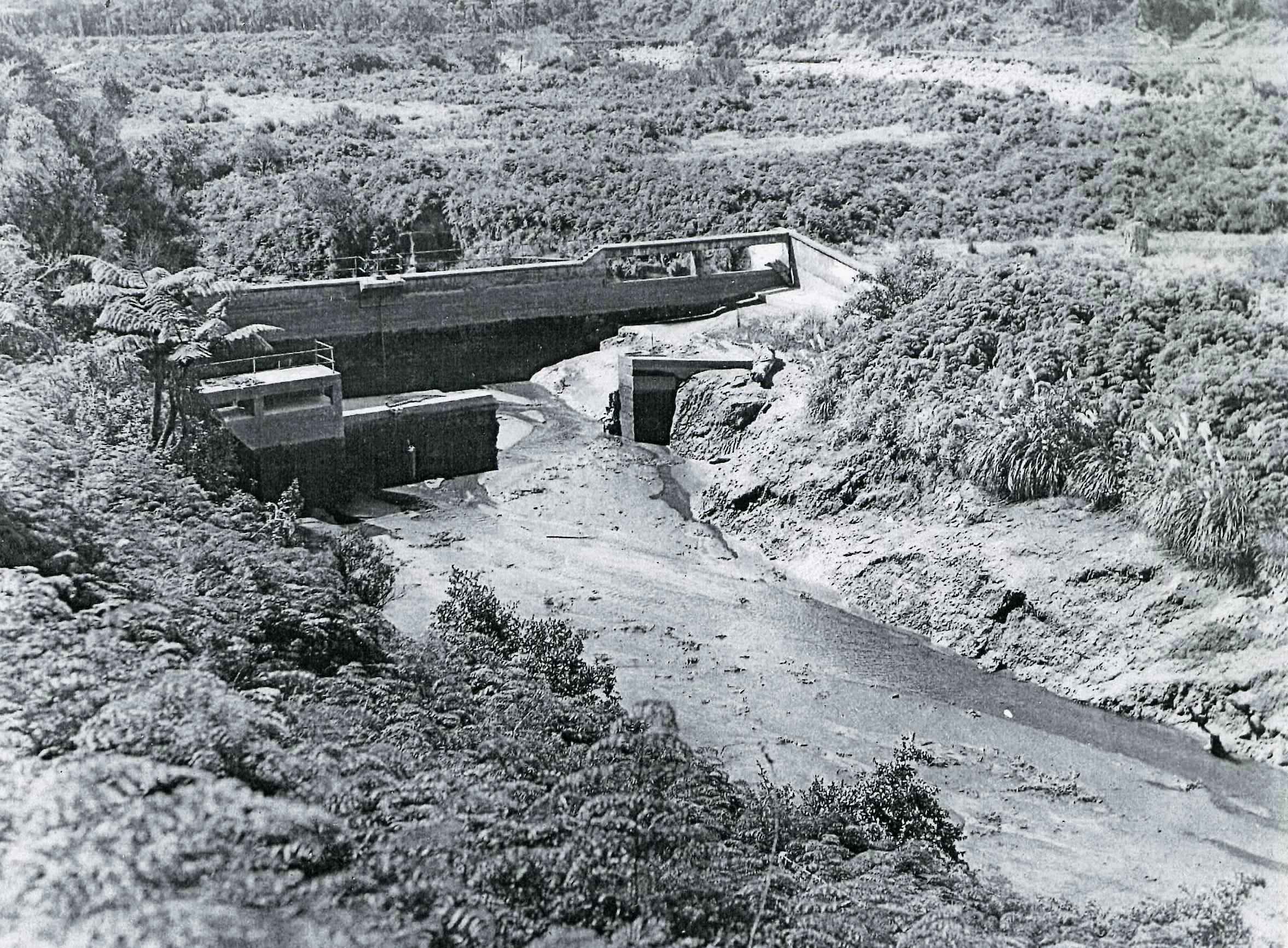
New Plymouth’s hydro-electric scheme still operates as TrustPower’s (2023, now known as Manawa Energy) Mangorei Power Station alongside the Waiwhakaiho River near Burgess Park. The complex has been added to a number of times over the years since its beginnings in 1906 as a combined water and electricity supply. It’s one of New Zealand’s oldest operating stations albeit much-evolved from its simple beginnings.
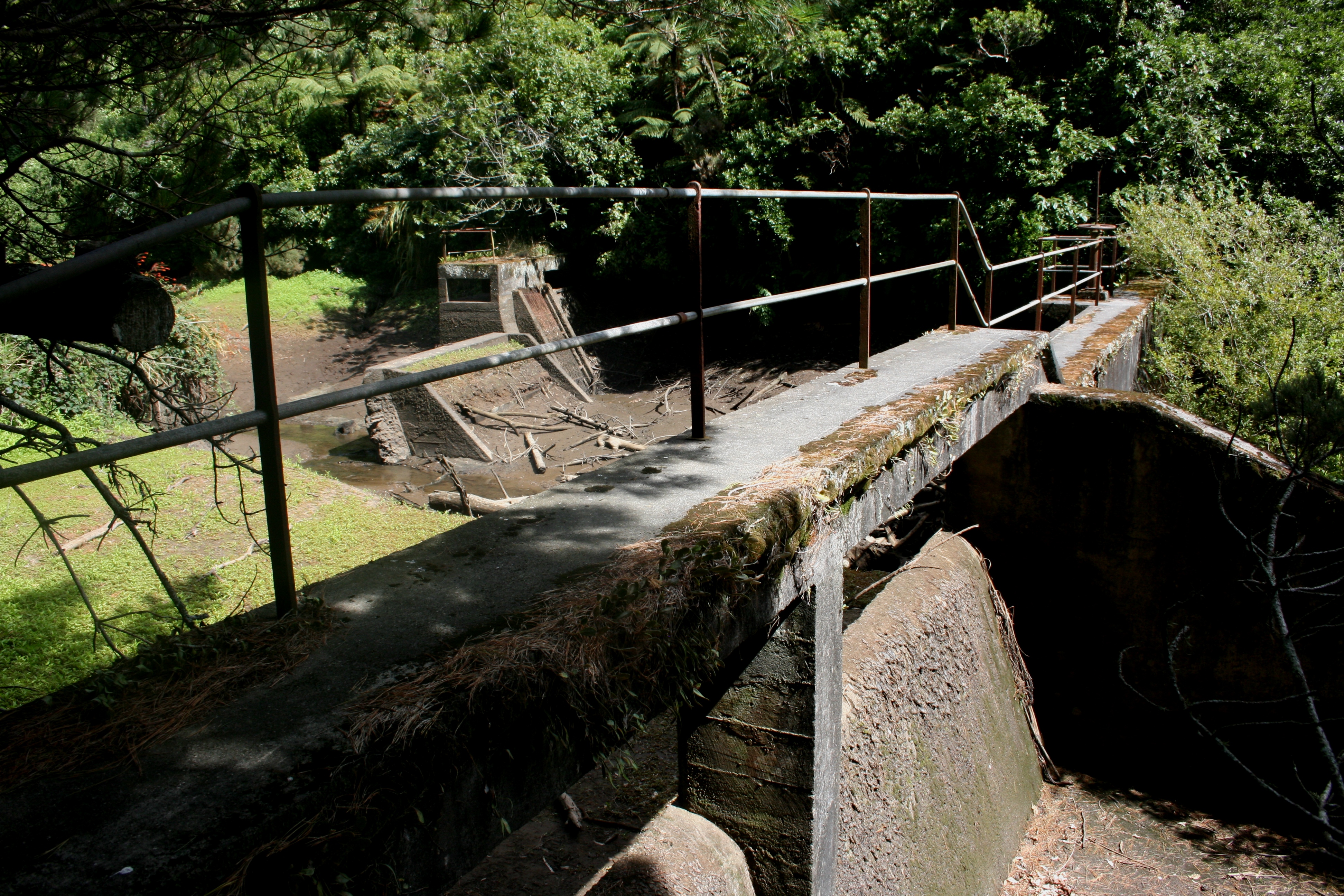
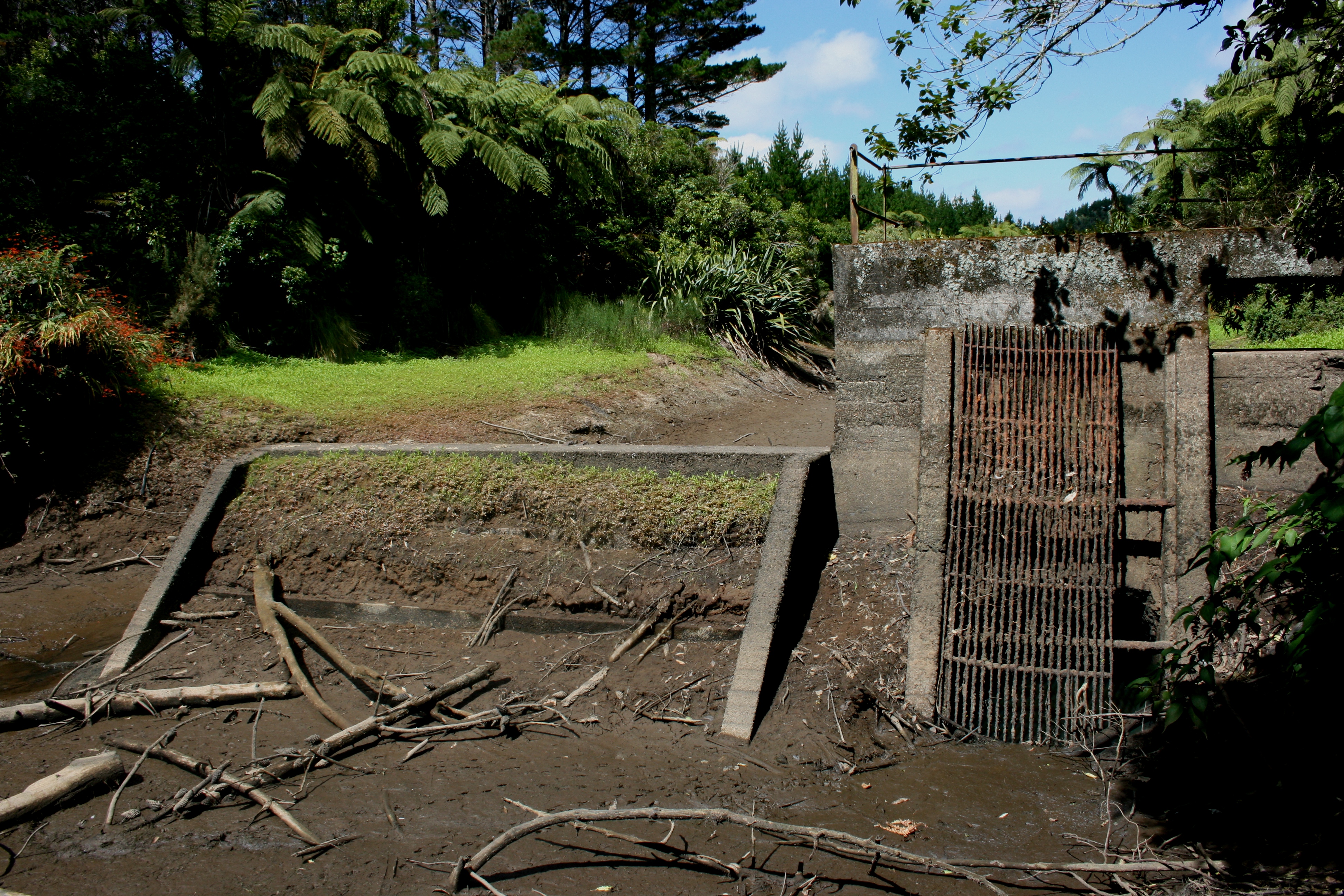
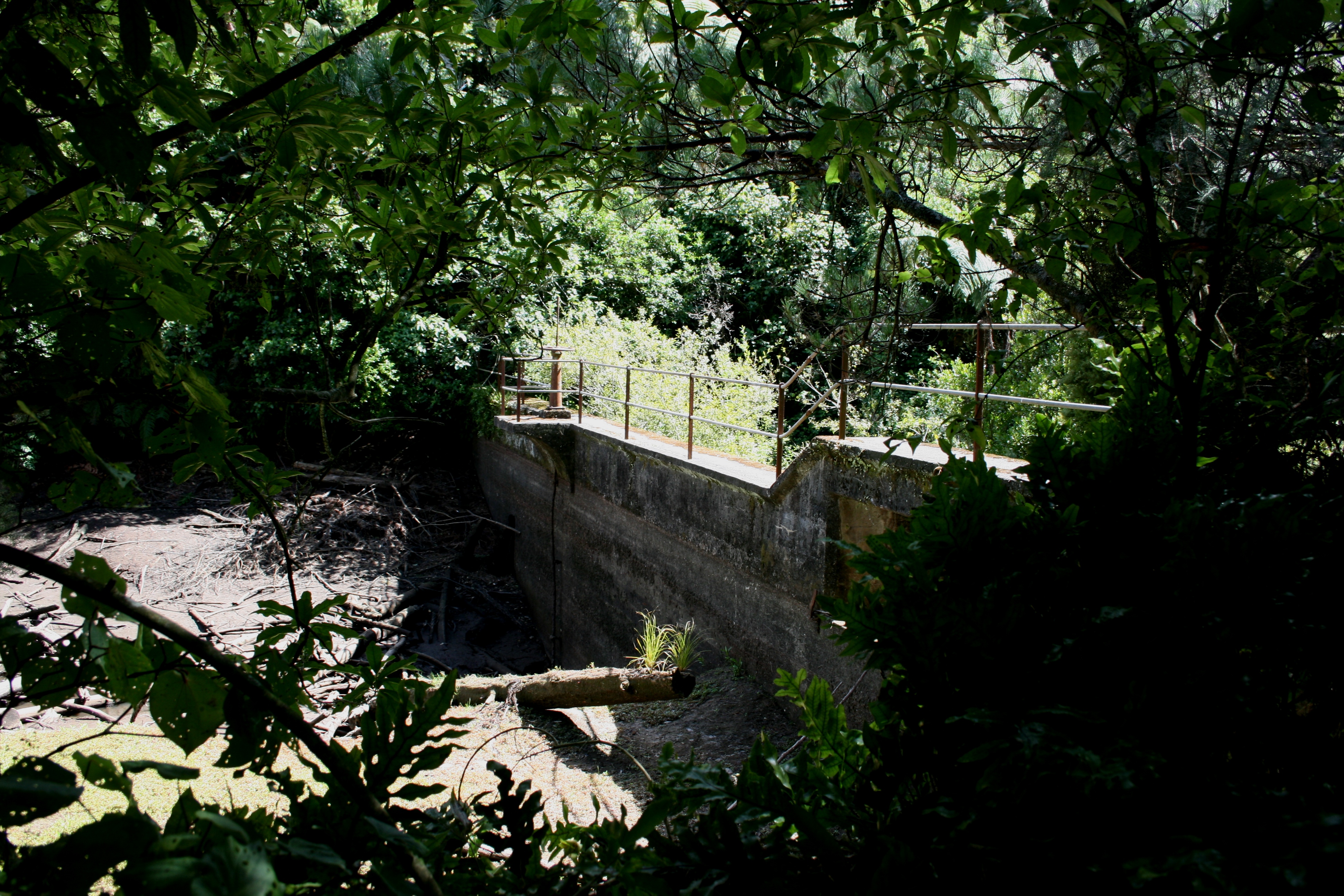
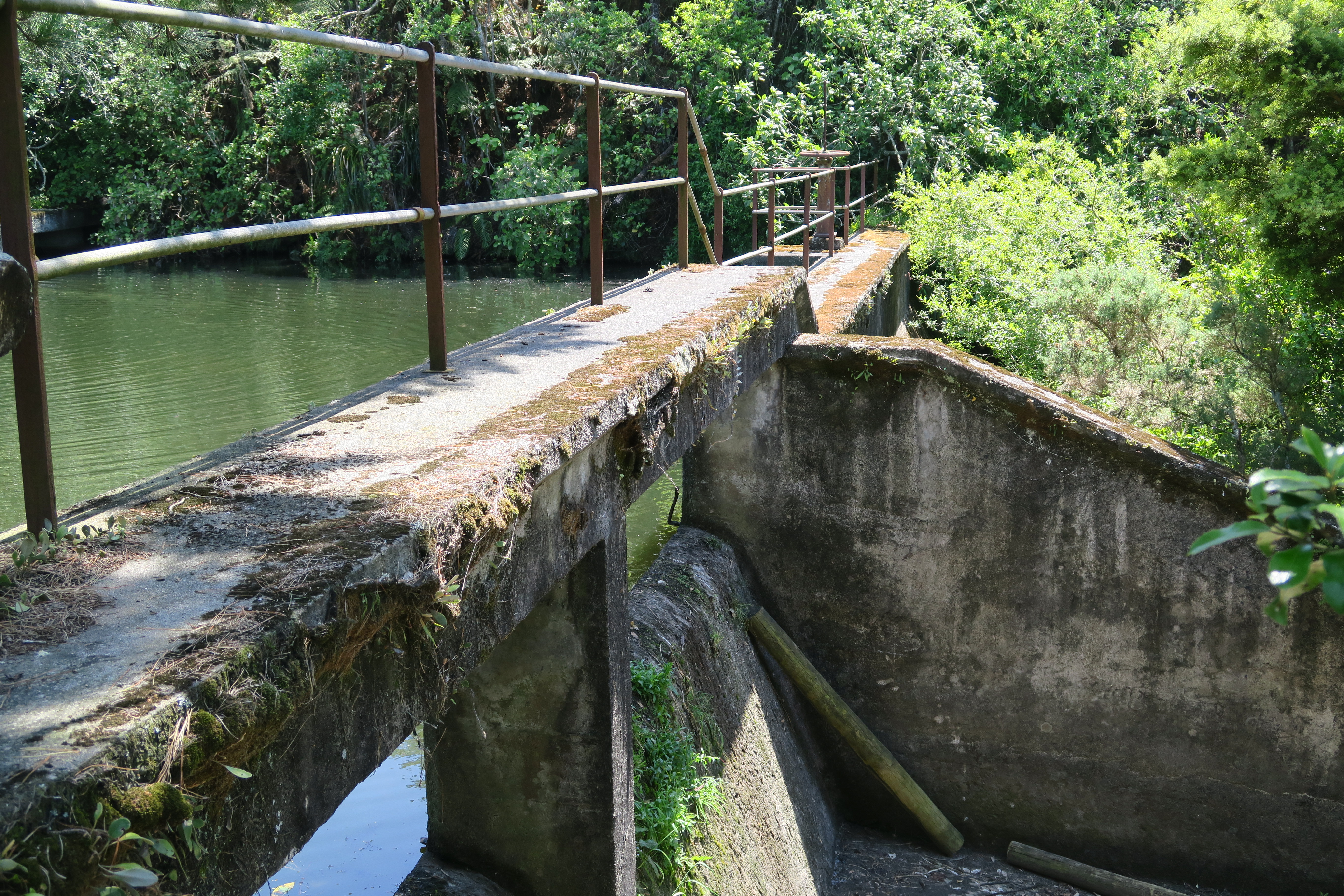
The first scheme was merely a 1200-metre water supply piped directly from the Waiwhakaiho River to the generating station. The water supply, of course, suffered in times of low summer flow, so a storage dam was built on the Mangamahoe Stream in 1914. A new intake was also constructed a little further up the Waiwakaiho River and a 420-metre open water race led to the dam. This second intake proved nearly impossible to maintain as it frequently became blocked with boulders, gravel and timber which then had to be removed by hand. The first dam on the Mangamahoe Stream was washed out in 1917 and replaced by the surviving, but now unused, low-head dam a few metres downstream.
The 1914 was demolished in 2024. Access across the 1918 dam is restricted for safety reasons. Both dams were located at the northern end of Lake Mangamahoe, a short 1.5 km walk across the 1931 dam and through the forest tracks to the lower Mangamahoe Stream before it joins the Waiwhakaiho River.
The present concrete-cored earth dam now operating, was built in 1931 to form Lake Mangamahoe and its water, taken from the Waiwhakaiho River and the Mangamahoe Stream, is conveyed through tunnel and penstocks to the power station.
Related document:
The Alchemy of the Engineer: Taranaki Hydro-electricity, Ron Lambert (2015)
Please do not reproduce these images without permission from Puke Ariki.
Contact us for more information or you can order images online here.
The information on this website is provided for general research and reference only. While we try to keep content accurate and current, we make no guarantees about its completeness or correctness. It should not be considered a replacement for a LIM or a Property Report. Some content is supplied by third parties. Puke Ariki has not verified this content and users should check its accuracy before relying on it.The inclusion of a building on the website does not imply heritage status. See SCHED1 in the NPDC District Plan for a list of buildings that have rules about what can happen to or around them (administered by NPDC). See the New Zealand Heritage List for a list of buildings that are celebrated for their heritage significance but are not subject to rules (administered by Heritage New Zealand Pouhere Taonga). Should any corrections need to be made to the records or for more information please contact us.


