

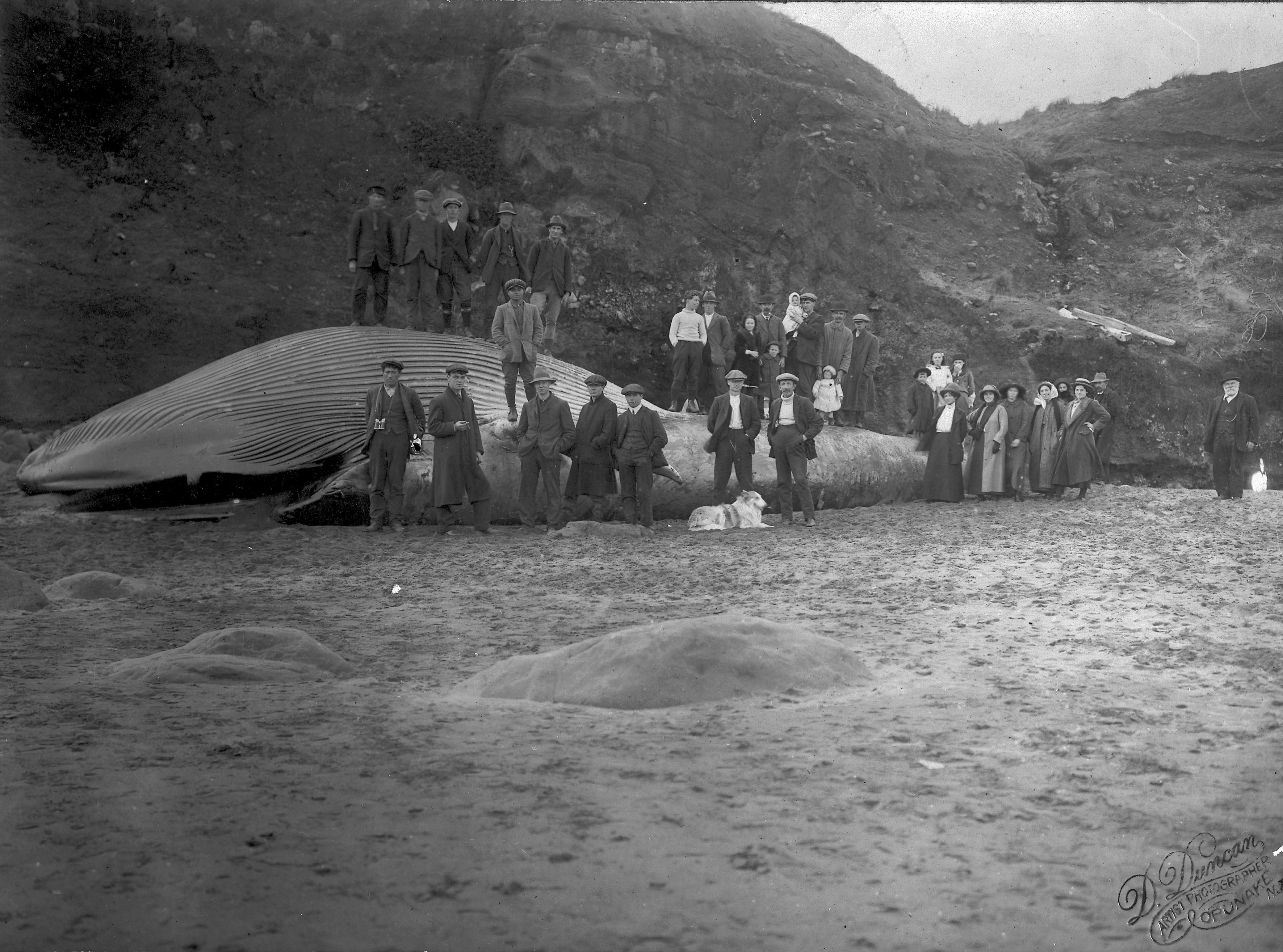
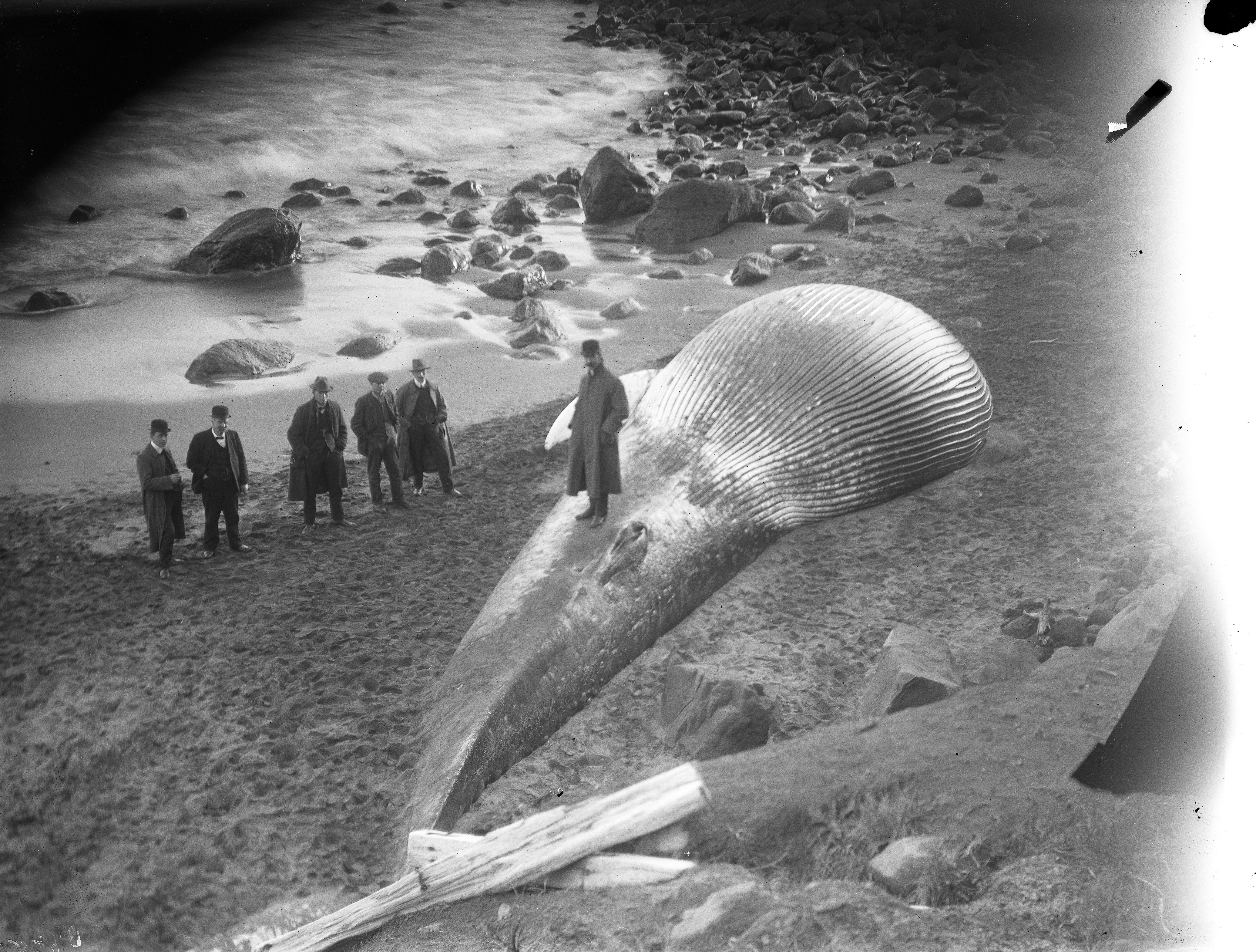
Stranded on the beach at the end of Ōpua Road, Ōpunake on 7 September 1913, this whale was discovered by Frederick Hoskin who owned a nearby farm. News of the dead “sea monster” spread quickly and people flocked to see it. Locals who owned a car did a “good business by running sightseers down to the beach” according to the local papers, and classes at Opunake School finished early so pupils could visit the carcass.
By 12 September, when the whale had started to stink, the time had come to dispose of its enormous body. Cut up by hand and rendered down in large pots, it eventually produced more than 3000 litres of valuable oil.
Used for everything from lubricating machinery to making soap, whale oil played a vital role in the First World War which broke out less than a year later. Soldiers on the Western Front rubbed it onto their feet to prevent trench foot, pilots smeared it on their faces to protect against the cold at high altitude, and it was used in the production of cordite which propelled artillery shells and ammunition.
Taranaki has a long history of whaling – there was a shore station operating from Ngāmotu as early as the 1830s – but changing attitudes mean that whales, alive and dead, are now treated with far more respect.
Please do not reproduce these images without permission from Puke Ariki.
Contact us for more information or you can order images online here.
The information on this website is provided for general research and reference only. While we try to keep content accurate and current, we make no guarantees about its completeness or correctness. It should not be considered a replacement for a LIM or a Property Report. Some content is supplied by third parties. Puke Ariki has not verified this content and users should check its accuracy before relying on it.The inclusion of a building on the website does not imply heritage status. See SCHED1 in the NPDC District Plan for a list of buildings that have rules about what can happen to or around them (administered by NPDC). See the New Zealand Heritage List for a list of buildings that are celebrated for their heritage significance but are not subject to rules (administered by Heritage New Zealand Pouhere Taonga). Should any corrections need to be made to the records or for more information please contact us.


