


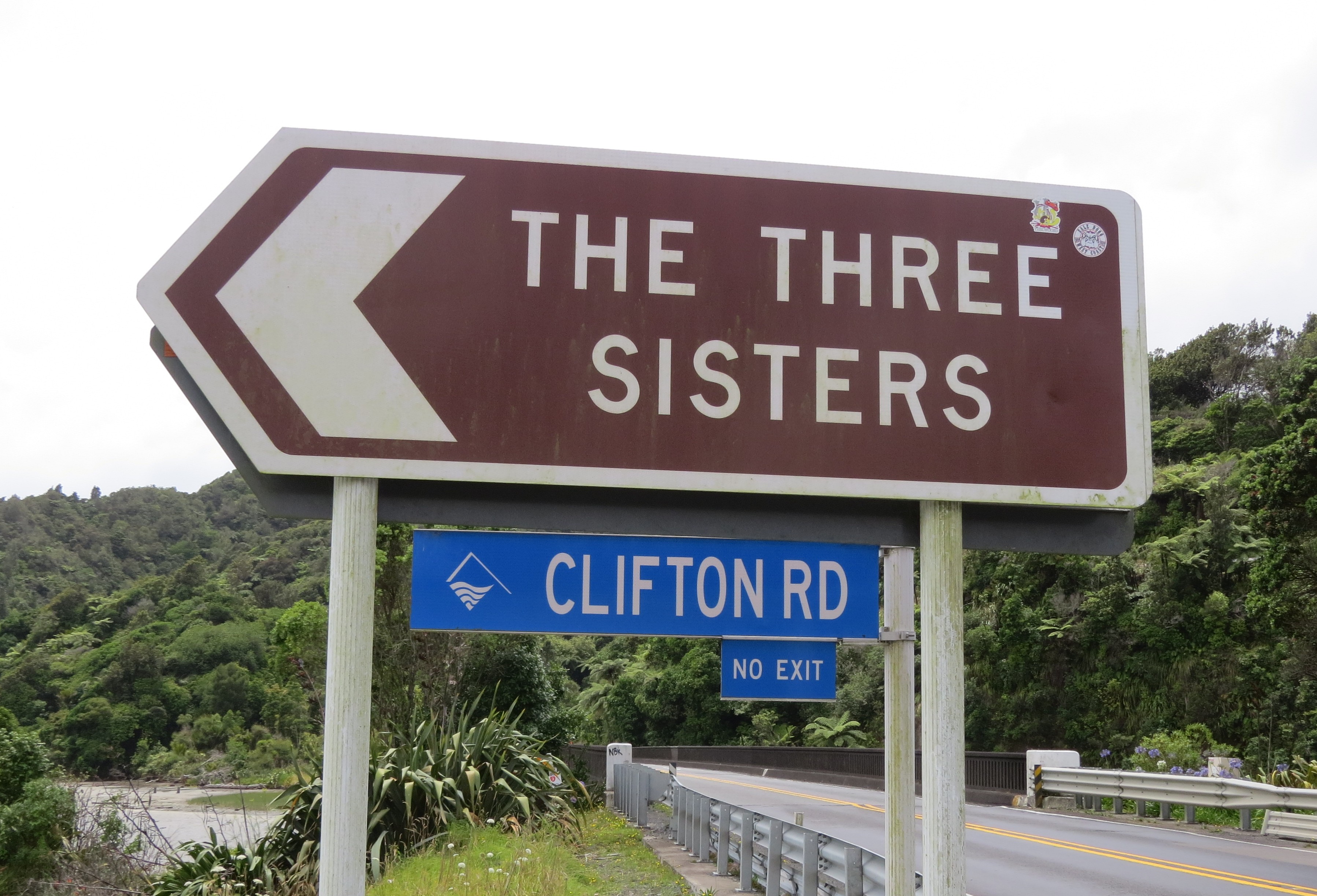
Clifton Road runs off State Highway 3 just north of Ahitītī. It takes its name from a suburb of Bristol, one of the oldest and most affluent areas of the English city. The man who named the road grew up in Clifton but was murdered in Taranaki.
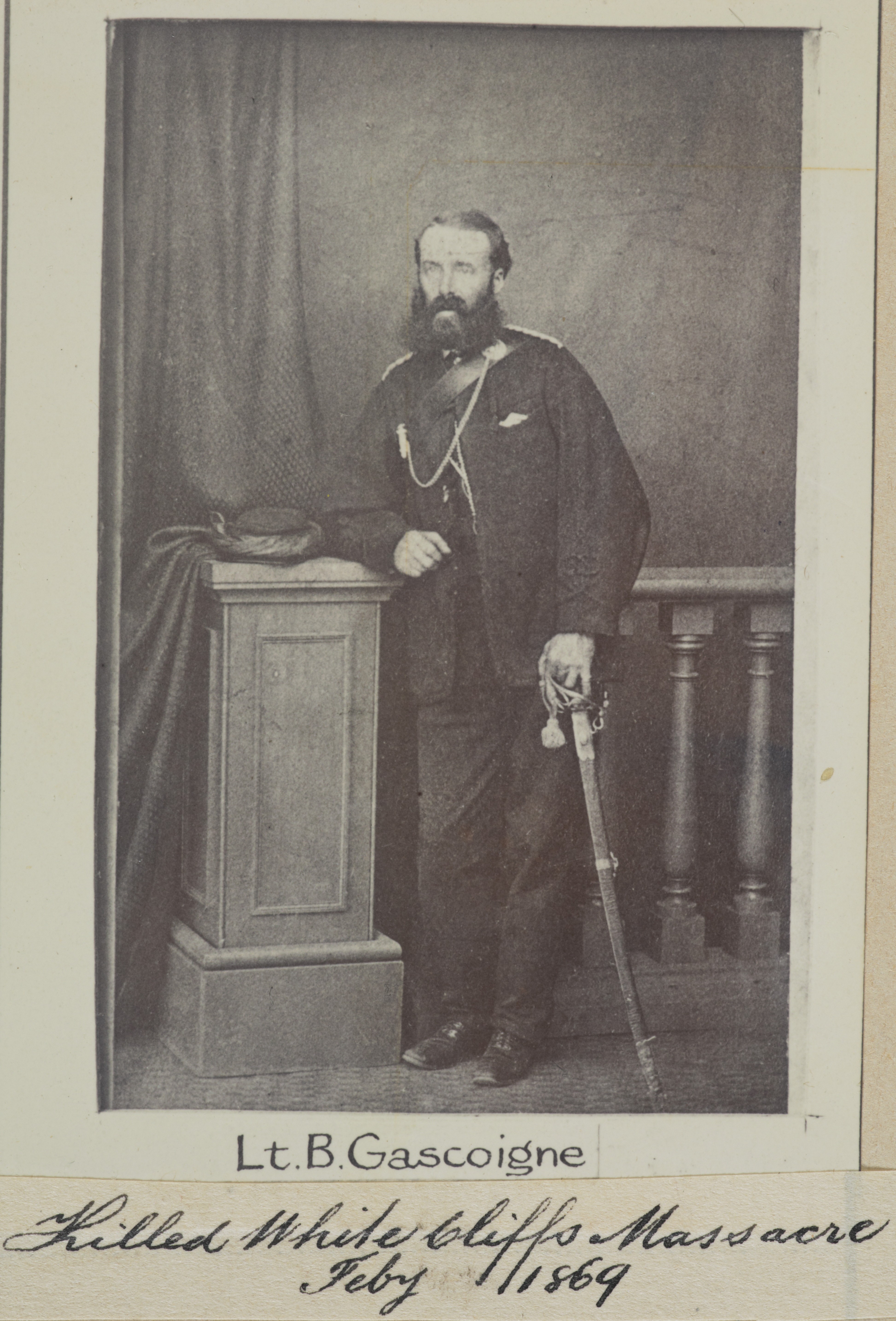
Bamber Gascoyne (1831-1869) was the eldest of eleven children born to John William Gascoyne and his wife Julia (nee Cumberland). His well-to-do parents fell on hard times so Bamber immigrated to Australia in 1853 where he joined the Melbourne mounted police.
Ten years later Governor George Grey sent agents across the ditch to enlist men to take part in the New Zealand Wars. These military settlers were to take up arms for king and country to protect isolated settlements from attack by Māori deemed to be in rebellion against the Crown for daring to defend ownership of their whenua/daring to challenge confiscation of their whenua. In return, after a certain number of years of service they would be offered land at no cost.
Bamber was given free passage on a ship called the Brilliant, arriving in Auckland on 17 February 1864. He had married Annie Keeler the year before so she accompanied him, and they had three children in Aotearoa: Laura was born in 1864, Cecil in 1866 and Louisa in 1868.
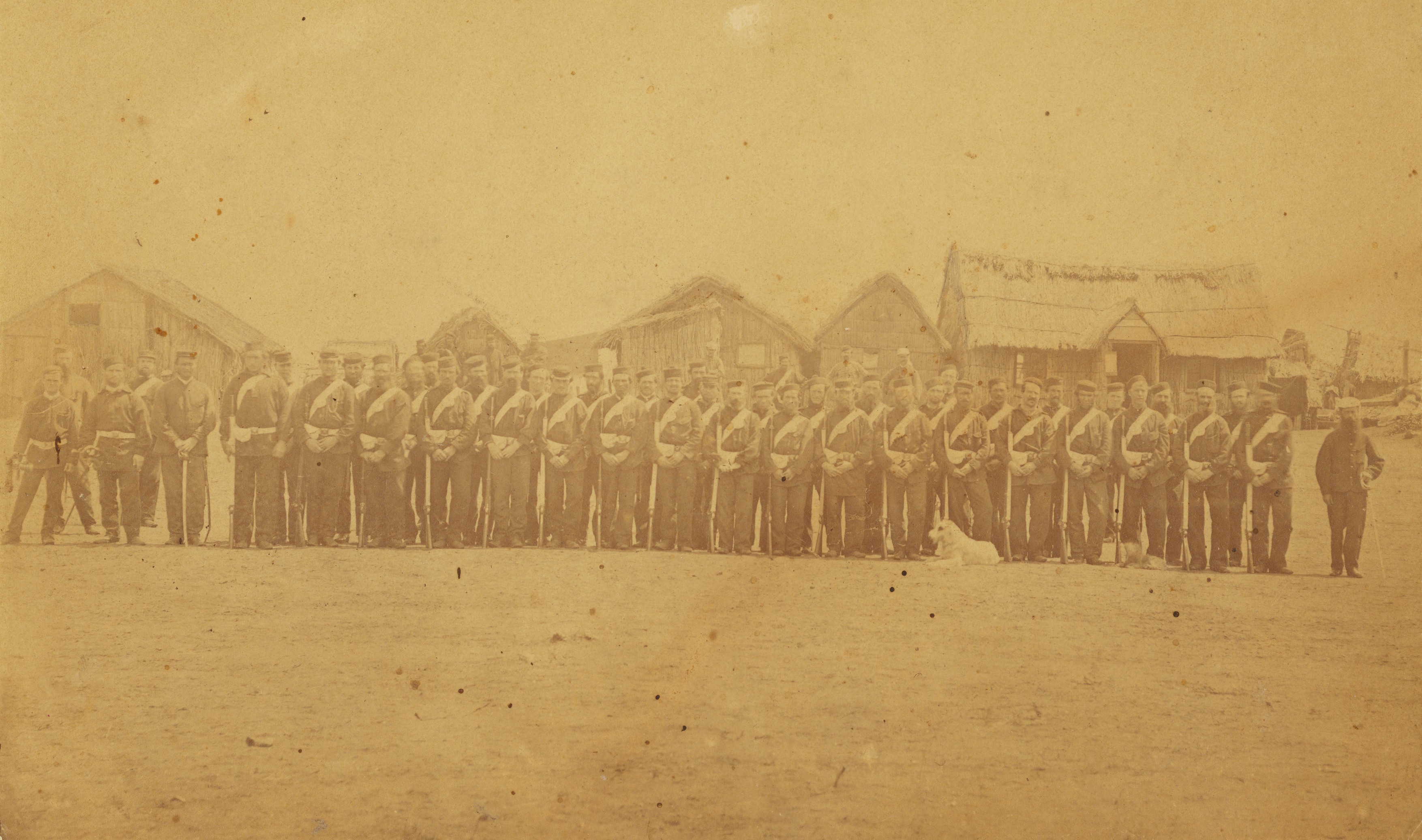
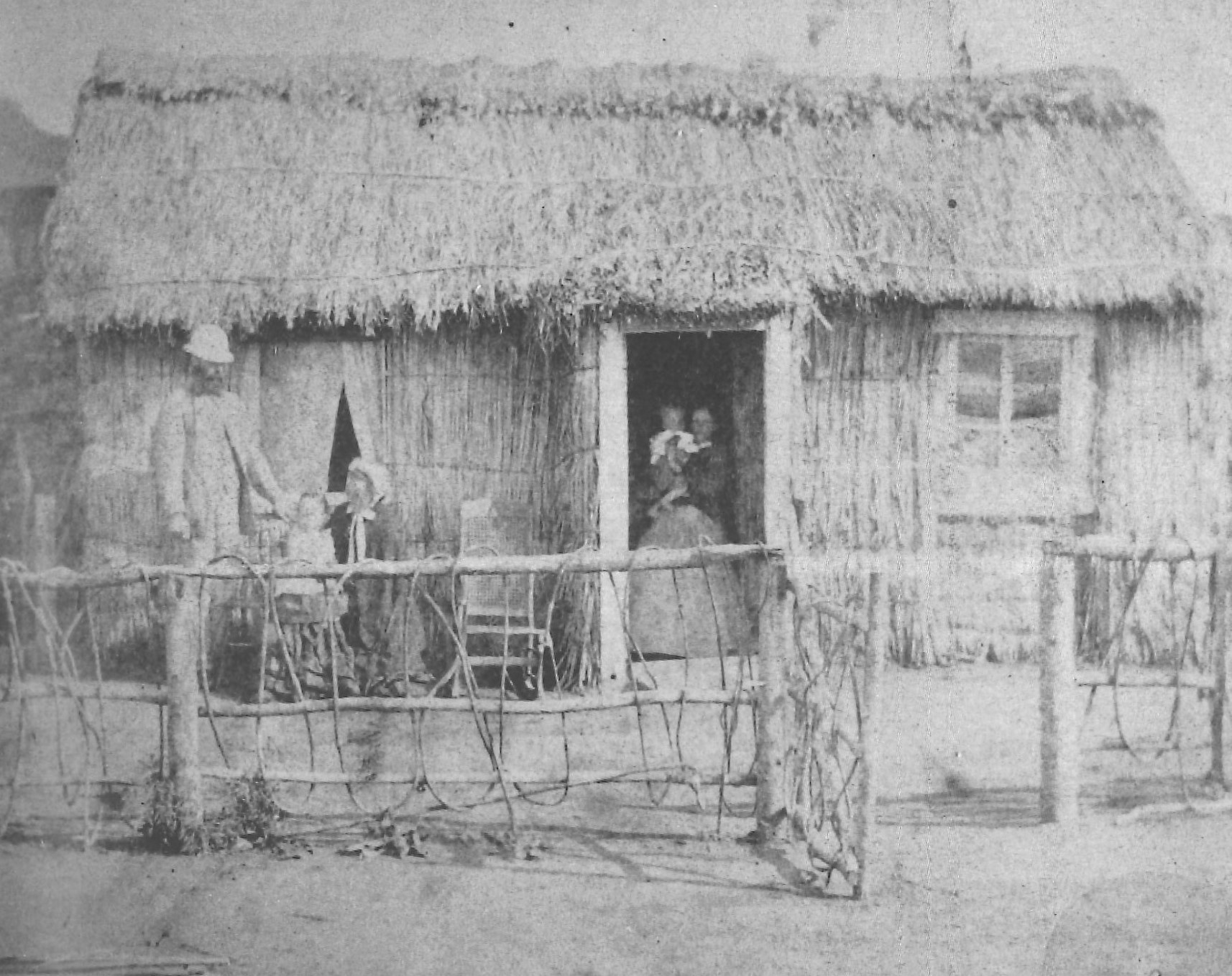
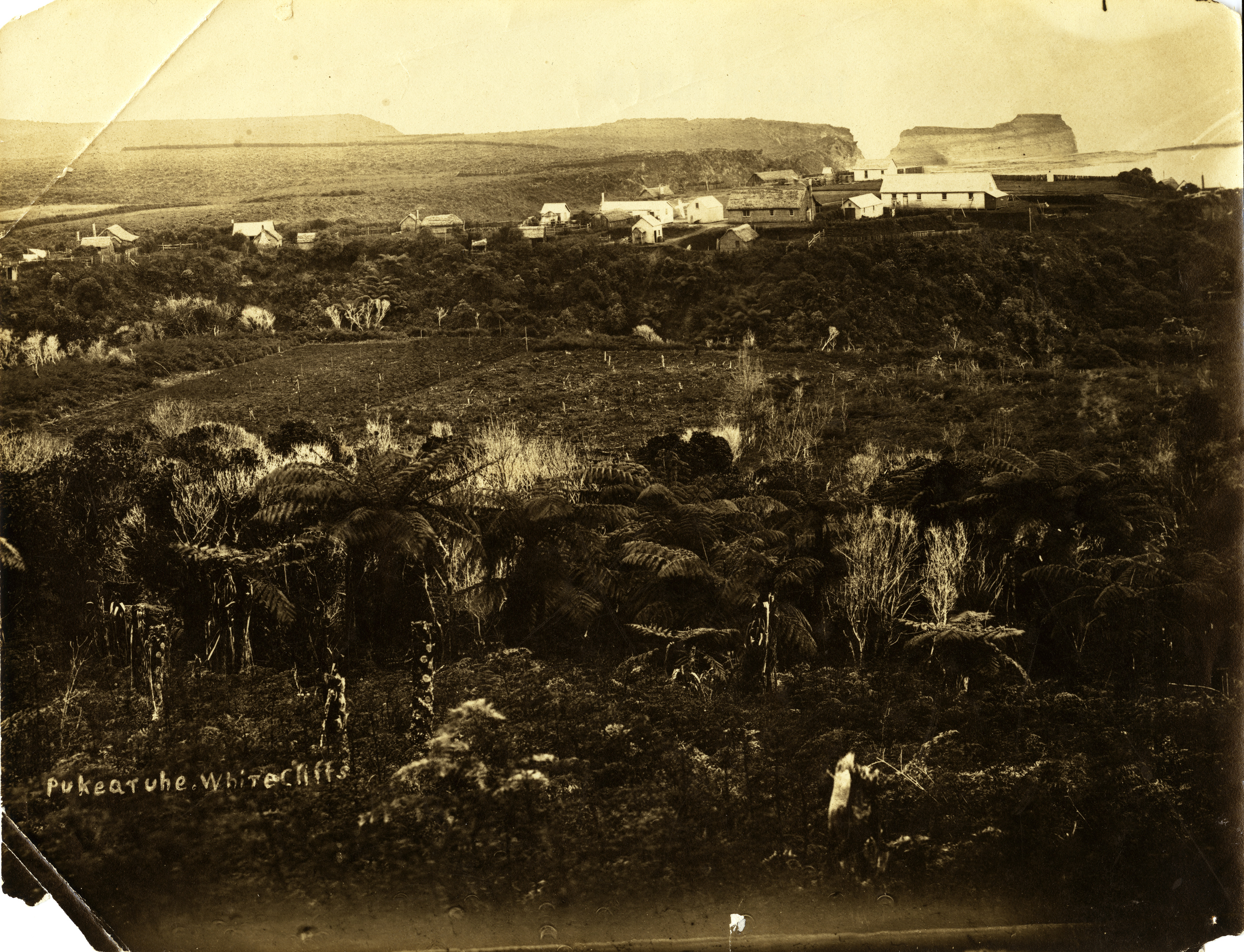
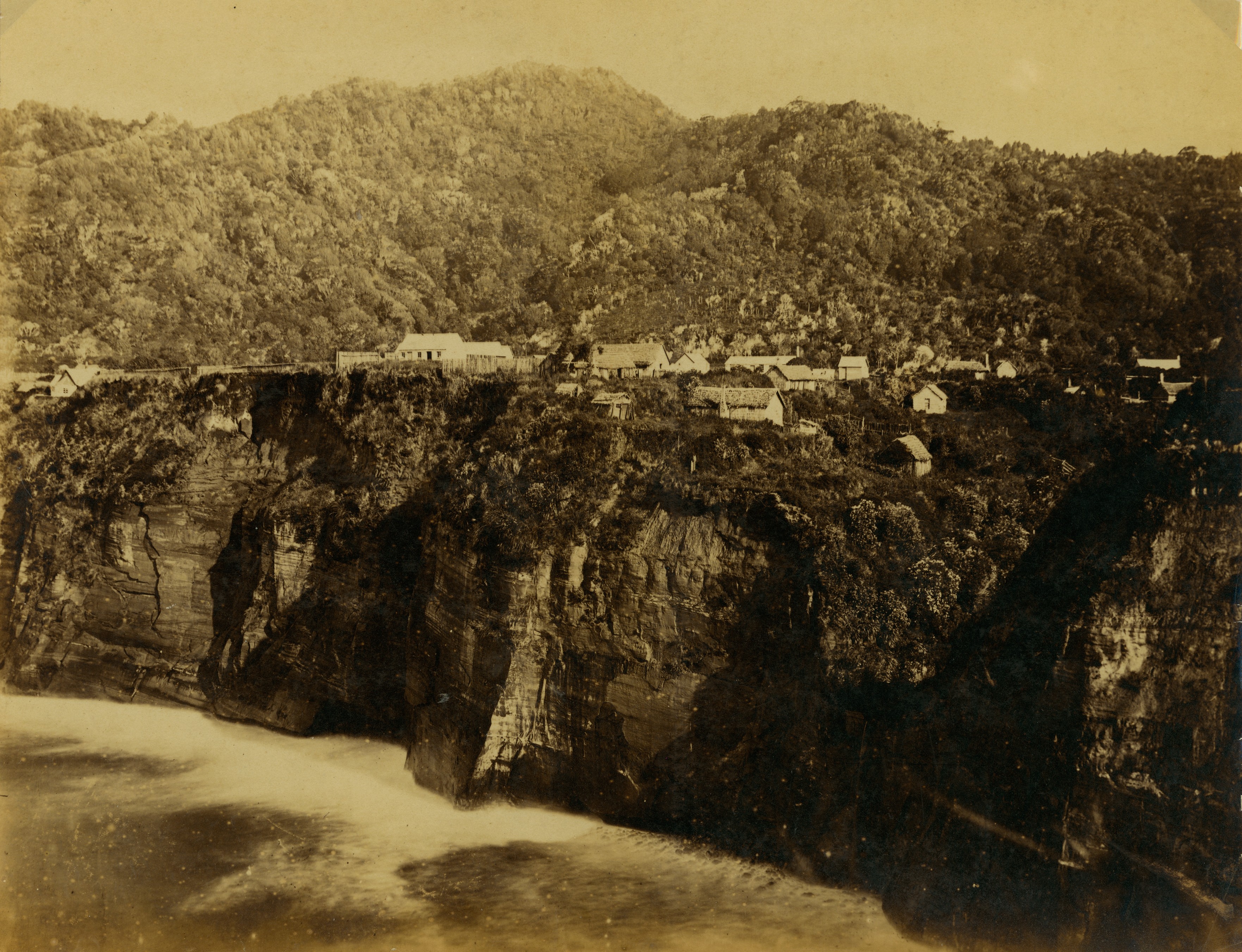
Bamber was made a lieutenant in the Taranaki Militia and sent to command the garrison at Pukearuhe, north of New Plymouth. His redoubt was located on the commanding site of an abandoned pā, on land confiscated from Māori, and consisted of a two-storey blockhouse, stockade and ammunition store plus raupo whare for the men and their families.
Whether he was homesick or being sarcastic, Bamber called the rough-and-ready military settlement Clifton, after the wealthy place where he grew up. The word comes from the Old English ‘clistone’ meaning a hillside settlement. This provided a name for both the road and, in 1885, a county which became part of the New Plymouth District just over a century later.
The Gascoynes were kept company by fellow soldiers and neighbouring settlers who came to the redoubt for games of cricket and cards and to fish on the beach, which was accessible by a steep footpath. Wesleyan missionary Reverend John Whiteley rode up from New Plymouth every Saturday to spend the night and lead a church service the next morning.
Fifty men had once guarded the blockhouse, but as the threat of war seemed to recede the garrison was reduced so by 1868 Bamber had only six men, not enough to defend his position however impregnable it appeared.
On 13 February 1869 a group of armed Ngāti Maniapoto warriors, led by Hōne Wētere Te Rerenga, a mission-educated chief who had fought against the British in the First Taranaki War then joined the Pai Marire movement, attacked the redoubt. Their aim was to divert government troops currently fighting Riwha Tītokowaru in South Taranaki and force the army to retaliate, thus convincing anti-war factions within the Māori King movement to unite and retake the North Island. There was also the matter of utu for the killing of Māori children by cavalry volunteers led by John Bryce at Handley’s Woolshed near Whanganui in November 1868.
Garrison cook John Milne and soldier Edward Richards were killed first, with taiaha and tomahawks, then the taua went after the Gascoynes. The family were out tending their potato fields so the warriors hid and waited. When they returned, Annie and her children wearing only nightdresses as it was a hot day, they too were clubbed to death. Even their pets were killed, a dog and two cats. Wētere and his followers looted their home, helping themselves to food and resting, before killing Reverend Whiteley the next day. Coming to deliver his usual sermon, Whiteley was shot to death along with his horse Charley.
The eight bodies were later recovered by a party of 72 volunteers and militia from New Plymouth, with a thousand people gathering on the beach to mourn their return. The victims of the massacre were buried with full honours at Te Hēnui Cemetery on 17 February 1869, five years to the day since Bamber and Annie had come to New Zealand to begin new lives.
Wētere was eventually pardoned for his role in the murders and peace restored. A few grassy mounds and a stone fireplace are all that now remain of the original hillside settlement at Pukearuhe.
This story was originally published in the Taranaki Daily News.
Please do not reproduce these images without permission from Puke Ariki.
Contact us for more information or you can order images online here.
The information on this website is provided for general research and reference only. While we try to keep content accurate and current, we make no guarantees about its completeness or correctness. It should not be considered a replacement for a LIM or a Property Report. Some content is supplied by third parties. Puke Ariki has not verified this content and users should check its accuracy before relying on it.The inclusion of a building on the website does not imply heritage status. See SCHED1 in the NPDC District Plan for a list of buildings that have rules about what can happen to or around them (administered by NPDC). See the New Zealand Heritage List for a list of buildings that are celebrated for their heritage significance but are not subject to rules (administered by Heritage New Zealand Pouhere Taonga). Should any corrections need to be made to the records or for more information please contact us.


