


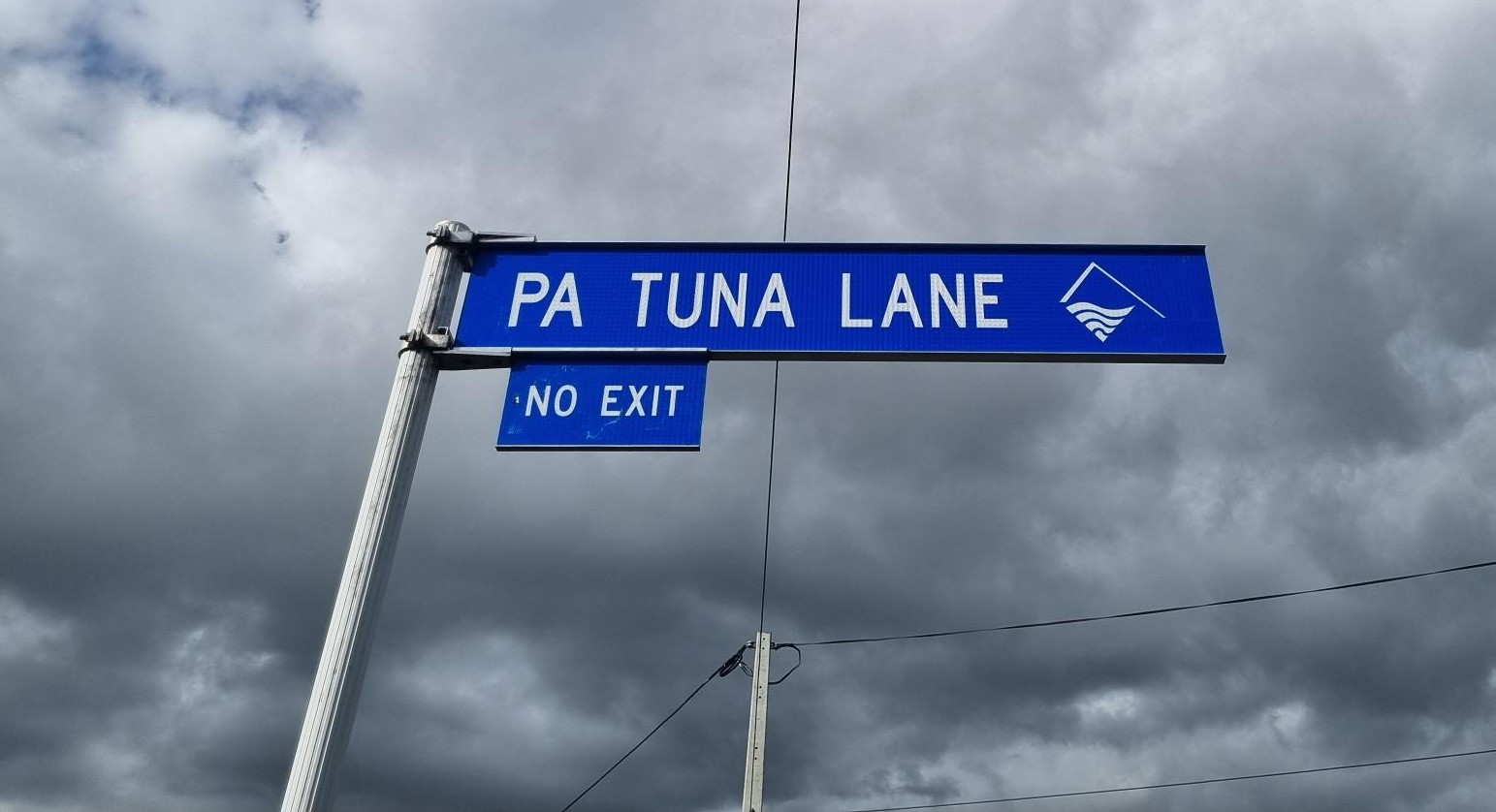
Pā Tuna Lane, just off Cowling Rd, is an accessway and then walkway through to some of the newer sections and subdivisions in Hurdon, New Plymouth.
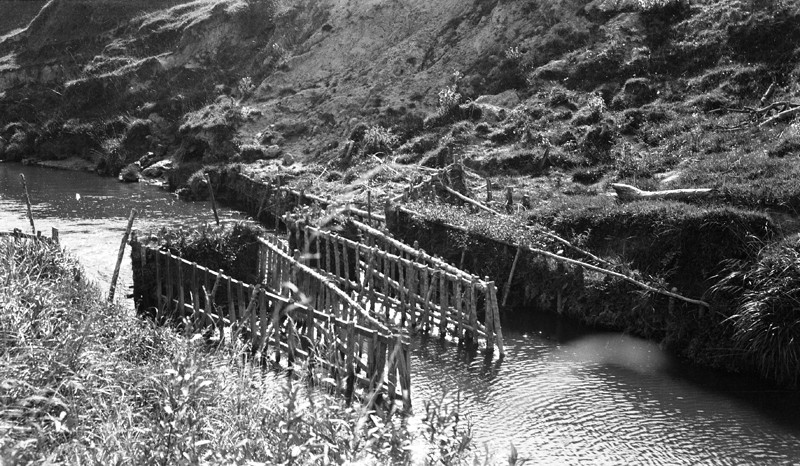
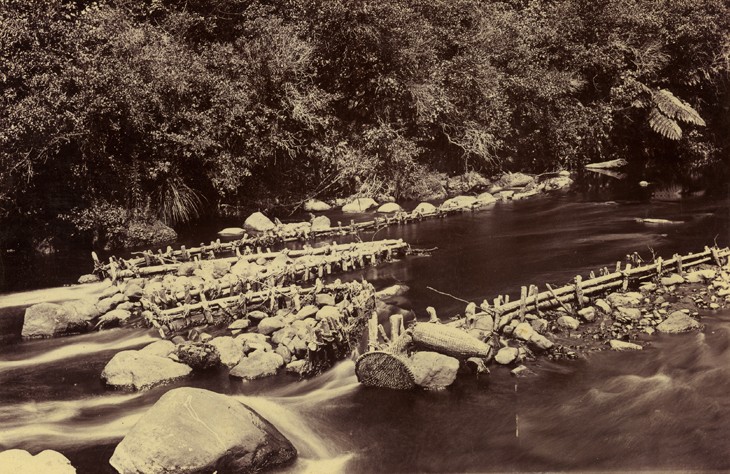
A pā tuna is a permanent eel weir used by Māori in both small and big rivers, as well as lagoons and lakes, to catch tuna. They were used in autumn, to catch tuna as they headed downstream to spawn in the sea.
The lane was named in 2021 and its title recognises the fish and fisheries once common in the nearby Waimea Stream. Nearby Atutahi Street and Piharau Cresent were also named after local fish. Historically tuna (eel) were known to be in abundance in the area and were confirmed to have been in the Waimea Stream, which is located slightly further east of this lane, towards Frankly Road.
Tuna (both long fin and short fin) are a long-lived fish - there are records of females reaching 106 years old - that live in many rivers and lakes in New Zealand. Unusually they start their life in freshwater but make a long journey out to the Pacific Ocean to breed.
Māori created different types of pā tuna, with varying structures and designs depending on the body of water and its conditions, the material available and the different species of tuna being fished for. Many pā tuna looked like fence-like structures built across flowing water.
Up until the late 1800s, pa tuna were a frequent feature of many rivers, including those in Taranaki.
The Whanganui River was famous for its extensive pā tuna, many were so important they had special names assigned to them. In the early to mid-nineteenth century there was several hundred on the river however many of these structures were destroyed over the years as they hindered the movement of vessels, particularly the riverboats. Their destruction was decried by local iwi and led to many acts of resistance as well as pleas and petitions to local authorities to protect the weirs and iwi’s ability to fish for tuna.
Tuna were a very important food source for Māori and seen as a kaitiaki of the rivers, streams and lakes. Their abundance, or absence, was used as an important environmental indicator and there were controls around when and where they could be fished so they remained a sustainable resource. Māori have many different names for tuna depending on their size and maturity, and the names used can also differ from iwi to iwi.
This story was originally published in the Taranaki Daily News.
Books
Notes on Eels and Eel-Weirs, T W Downs (1918)
Fishing methods and devices of the Māori, Elson Best (1929)
Woven by water: histories from the Whanganui River, David Young (1998)
Please do not reproduce these images without permission from Puke Ariki.
Contact us for more information or you can order images online here.
The information on this website is provided for general research and reference only. While we try to keep content accurate and current, we make no guarantees about its completeness or correctness. It should not be considered a replacement for a LIM or a Property Report. Some content is supplied by third parties. Puke Ariki has not verified this content and users should check its accuracy before relying on it.The inclusion of a building on the website does not imply heritage status. See SCHED1 in the NPDC District Plan for a list of buildings that have rules about what can happen to or around them (administered by NPDC). See the New Zealand Heritage List for a list of buildings that are celebrated for their heritage significance but are not subject to rules (administered by Heritage New Zealand Pouhere Taonga). Should any corrections need to be made to the records or for more information please contact us.


