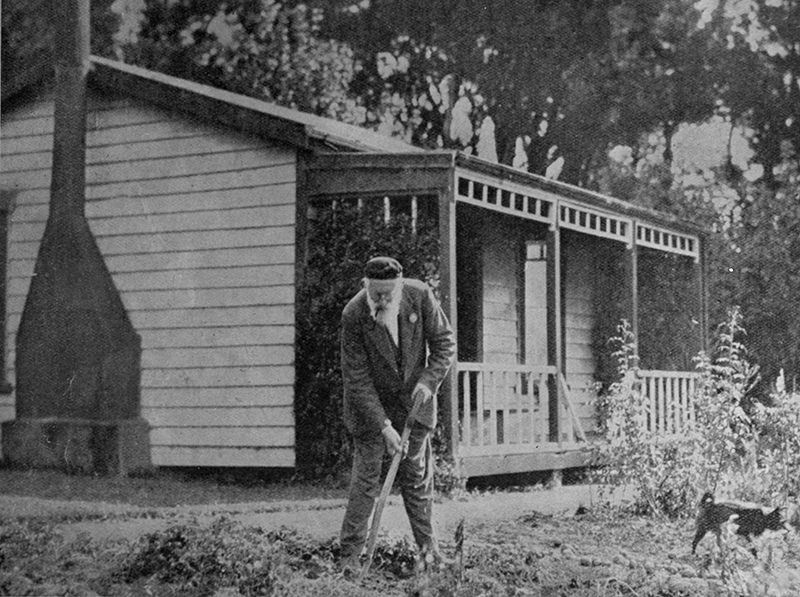
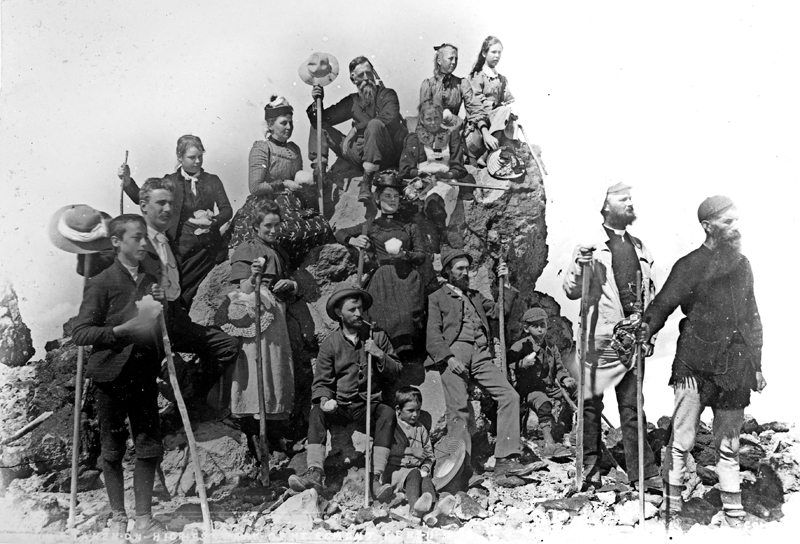
Hinrik "Harry" Peters was born in Cleve, Germany, in April 1852. He came to New Zealand as first mate on the immigrant ship Lammershagen.
On 11 July 1875, the ship was nearing the coast of New Zealand when the clouds parted and Peters was able to see the snowy peak of Mount Taranaki. It was love at first sight.
When the ship reached Wellington, Peters and his superior officer got into a disagreement. Peters deserted the ship and came to New Plymouth drawn by Mount Taranaki.
Peters settled on a piece of land in Kaimiro, which let him explore the northern side of the mountain and, in 1885, he found and cleared an easy route to the summit. Very soon the new route became the most popular way up to the summit. Because of the number of climbers, Peters had to create a shelter for the visitors. He set up tents for groups close to the place where the North Egmont Visitors Centre is presently located.
The first permanent accommodation at North Egmont was taken from the military barracks on Marsland Hill in New Plymouth and became known as "The Camphouse". Harry Peters became its first caretaker as well as a mountain guide.
After retiring from guiding in 1898, Peters' farm in Kaimiro became a stopping place for those who were returning from the mountain. Harry Peters died in 1941 at the age of 89.
Peters Road in Kaimiro and a stream near the Holly Hut were named to commemorate this explorer who made the north side of Mount Taranaki accessible to those who wanted to share his love of this beautiful mountain.
This story was originally published in the Taranaki Daily News.
Please do not reproduce these images without permission from Puke Ariki.
Contact us for more information or you can order images online here.
The information on this website is provided for general research and reference only. While we try to keep content accurate and current, we make no guarantees about its completeness or correctness. It should not be considered a replacement for a LIM or a Property Report. Some content is supplied by third parties. Puke Ariki has not verified this content and users should check its accuracy before relying on it.The inclusion of a building on the website does not imply heritage status. See SCHED1 in the NPDC District Plan for a list of buildings that have rules about what can happen to or around them (administered by NPDC). See the New Zealand Heritage List for a list of buildings that are celebrated for their heritage significance but are not subject to rules (administered by Heritage New Zealand Pouhere Taonga). Should any corrections need to be made to the records or for more information please contact us.