


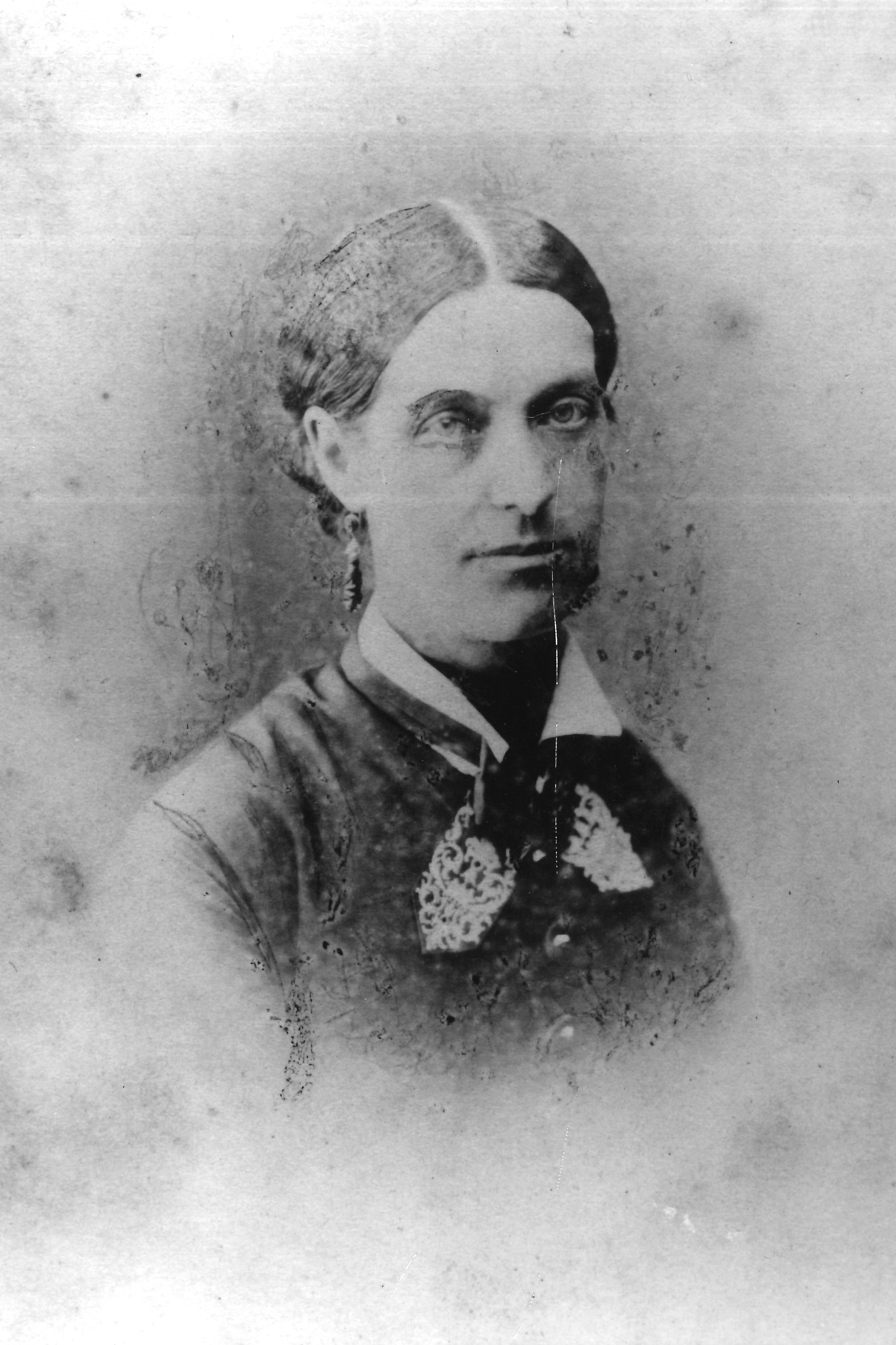
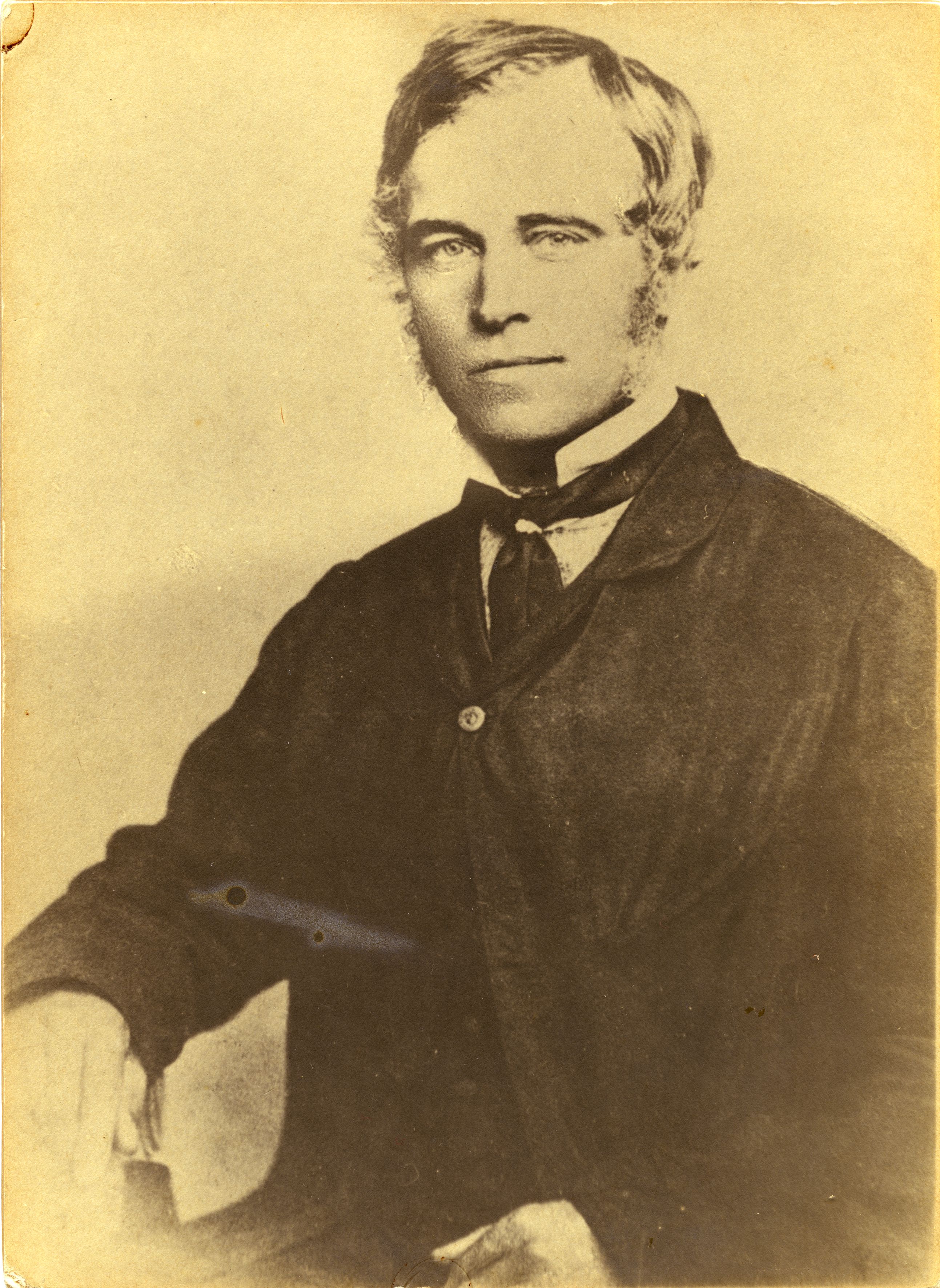
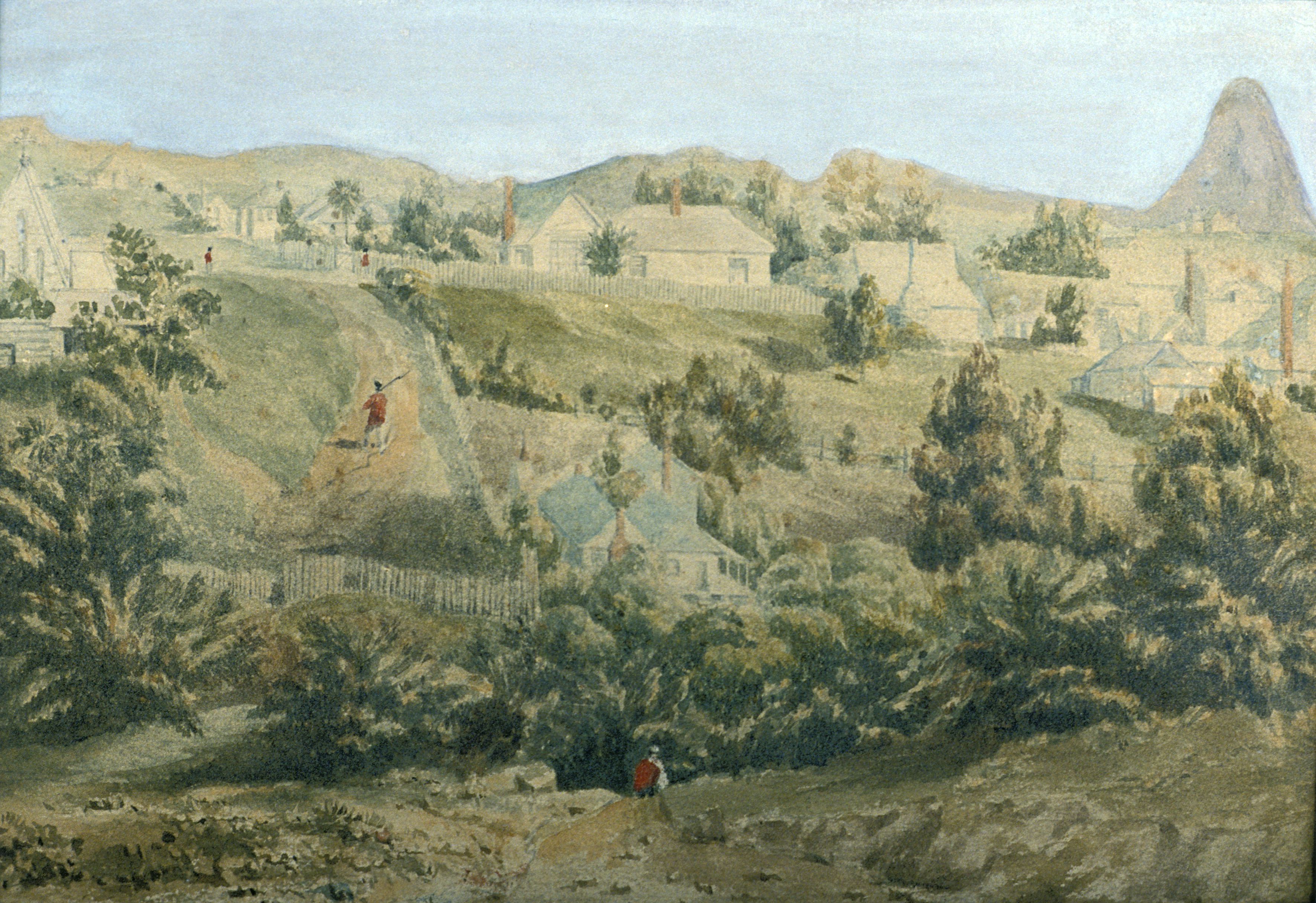
Harriet Wood was four years old when she arrived in New Plymouth with her parents Richard and Elizabeth on the ship Amelia Thompson in September 1841.
Solicitor William Halse travelled from England on the same ship and on 24 July 1856 they got married, when he was 39 and Harriet just 19. The couple went on to have eleven children, eight of whom survived into adulthood.
William immigrated with his brother Henry and the adventurous young bachelors gained a reputation for being tearaways, with William brought before the local magistrate in 1843 for “enticing away the wife of a Māori native”. But he soon grew up and was later appointed Deputy Superintendent of the Taranaki Provincial Council, as well as running his own law firm.
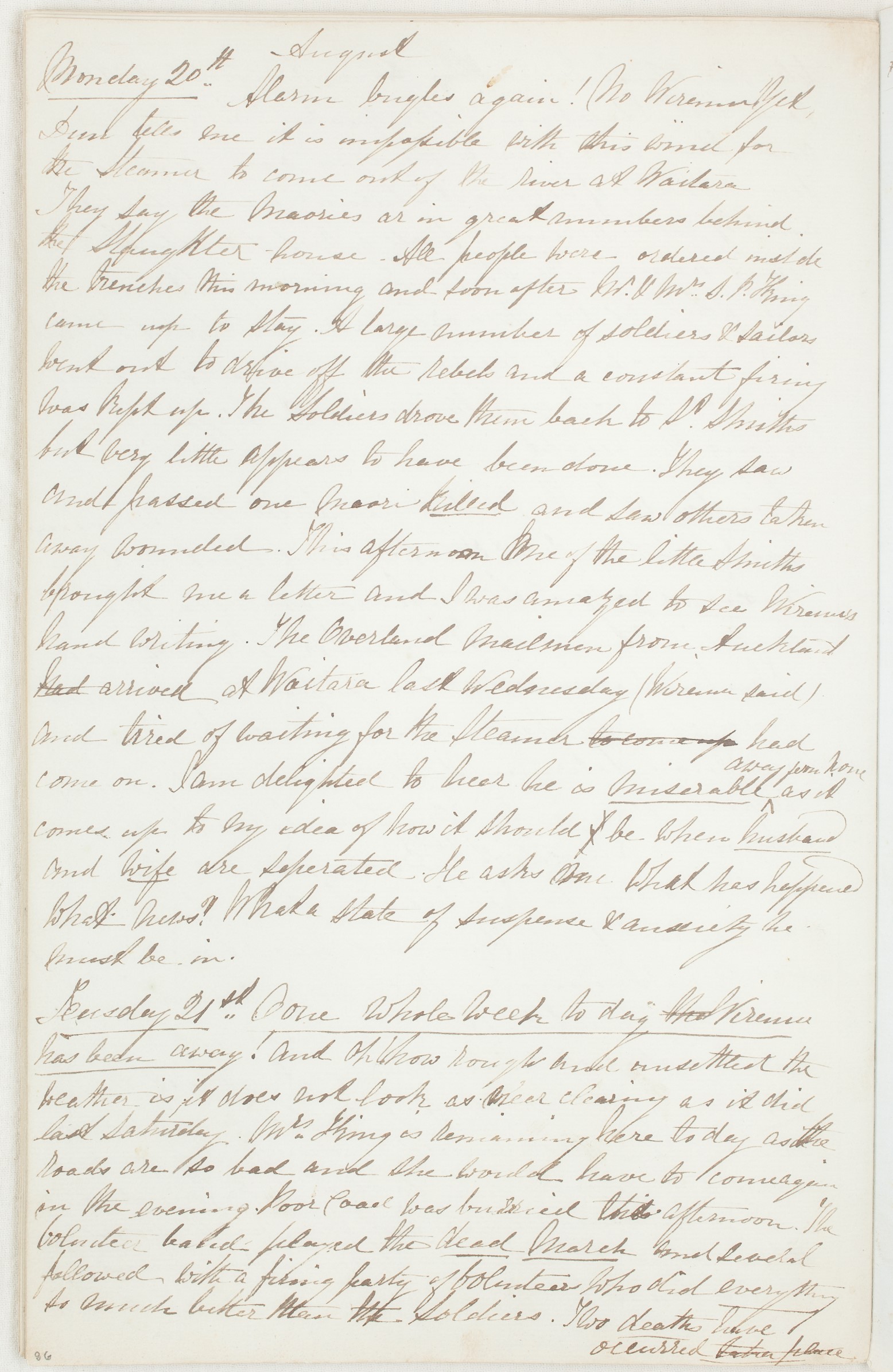
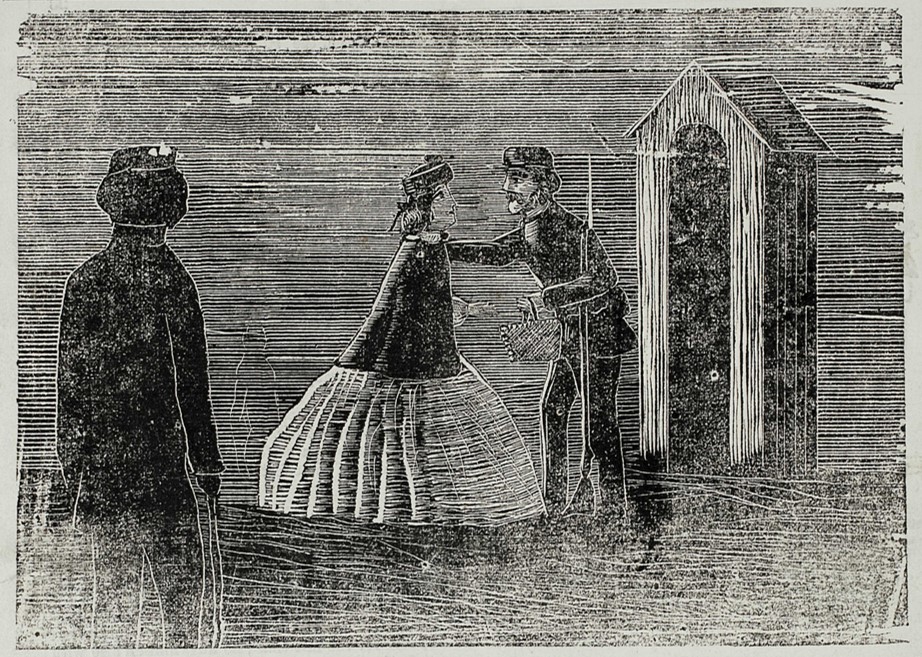
The diary Harriet kept between March and September 1860 describes life as a young mother during the First Taranaki War. She writes about fighting between Māori and European soldiers, fearing for her husband whenever he was posted on militia duty and the stress of living in a town under siege.
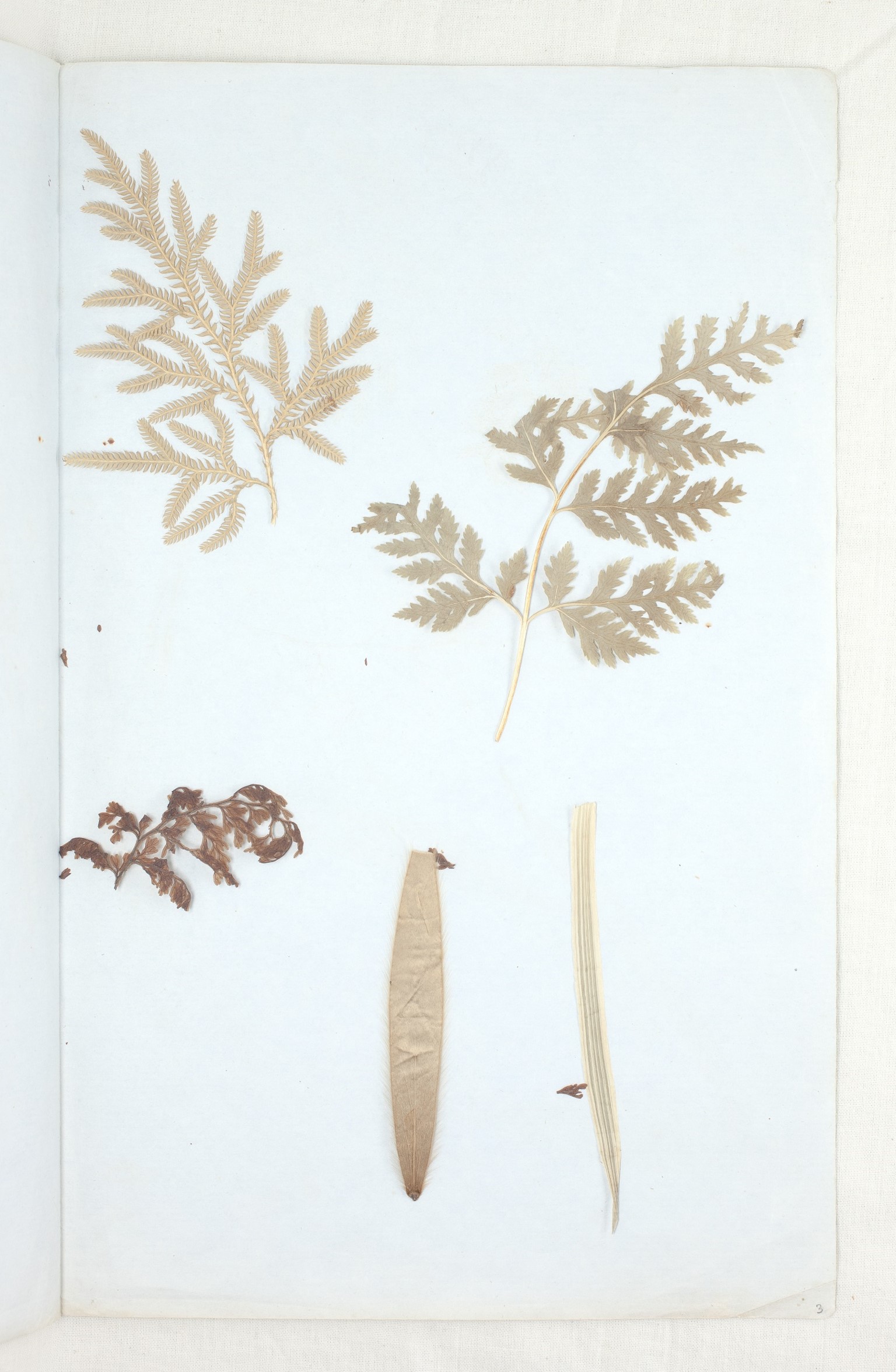
The journal isn’t all bleak, however. Harriet also mentions celebrating her fourth wedding anniversary, pressing flowers, her delight over a rare fall of snow, making herself a pair of slippers, reading precious letters from family in England out loud and acquiring a little dog named Nipper.
As well as calling him “Mr Halse” in her diary, Harriet often referred to William as “Wiremu” – perhaps a private joke, given his youthful high jinks, or maybe she just liked how it sounded, but whatever the reason, it’s another quirk of this already unusual record of the Taranaki Wars.
Harriet clearly adored her husband and children and there are many entries about her firstborn, daughter Loeta, and baby George:
3rd March 1860 Saturday
All New Plymouth in great confusion, and ourselves more particularly so as it is the day of Mother and Father leaving Taranaki for England. The steamer Airedale was to go at 10 o’clock so we hurried on to the beach and in passing through the Town we were surrounded by the Militia-men who were just “falling in[”]… the Niger was quite a new object, only once before have we had a Man of War here and never for such a hostile reason. – When we got to the beach the boat was quite ready to take them off and Mr. Halse went with them on board. I watched them with the aid of a glass till they got almost out of sight. Mr. Halse came on shore in the last boat and Loeta was delighted to see her papa return and seemed throughly [sic] to understand that Lally and Granda were going “long way” and that they were going to send her a ‘baby’ [doll] that could open and shut its eyes. We came back from the beach and had dinner. Mr. Lawson stayed the night and Mrs. Turton spent the evening with us. Nothing was talked of but fighting and the maories [sic]
22nd [March] Thursday
Rain again. An attack is expected on the town by the Ngataruanui’s [sic]. This evening I went with the Miss Upjohns to Pitts to buy a boy toy for George as tomorrow is his birthday.
23rd March Friday
I was very busy this morning making tarts, puffs… etc for Georges birthday party. Poor little fellow how many birthdays will he have? This is his first. It does not seem to me 12 months since he was born… In the afternoon we took all the children on the beach. They enjoyed themselves very much and after giving them a tremendous tea, sent them home. At ½ past 9 o’cl[ock] we went up to the Land Office with Coffee to Mr. Halse who was on picket duty there.
Teusday [sic] [April] 17th
When Mr. H[enry] Halse came up to breakfast this morning he wore a pair of black webb slippers very much like those mother used to wear. Loeta on seeing them called out “look mama that boy got on Lally’s shoes” and no telling her would persuade her to the contrary.
Monday 7th [May]
It is sill [sic] very stormy and every body is very much excited expecting the Waikatoes [sic] arrival as they have threatened to attack the town in stormy weather or at night. Bullock carts were sent to Tataraimaka today to be in readiness to bring up the detachment stationed there. This morning Wiremu asked Loeta what she would say to Granny when she came back. She said with the greatest readiness “Loeta say Good Lally Loeta love you, you bring Loeta big, big doll open and shut eyes and have on lots of petticoats”. So… she wants something for her love…
Teusday [sic] 29th [May]
I am busy today writing to Mother & Father… Loeta this morning hearing me say something about writing to Mother insisted on having a pen and piece of paper to write. I asked her what she wanted it for and she said “Write letter to Lally and Granda to come back to Loeta”.
August saw Harriet’s diary entries become more dramatic:
Saturday 4th [August]
We were in the midst of dust clearing and cleaning this morning when suddenly the alarm guns from Marsland Hill and Mount Elliot fired and the bugles were clashing and schreeching [sic] together for the soldiers and civilians to assemble. On hearing the alarm we one and all rushed to the gates. Soldiers were called and yelling out The maories are in the town! Rush to the Barracks! Capt. Paul and Col. Gold were running like madmen driving screching [sic] woman and children before them & calling out To the Barracks! to the Barracks! My first impulse was to run with the children and on turning to go for them I saw Loeta running with Mrs. Lawrence & children and Ann caught up George and was off in a moment. I stopped to take a baskit [sic] of buns and cloaks and hats for the children not knowing when we should be back. Wiremu locked the doors and fell in with the volunteers in town. I could scarcely clime [sic] the hill it was so crowded with women and children. I met Tomasine Street who was like one bereft of her senses, screaming where are my children? She had no bonnet on and she was holding her baby in her dress. I took the baby from her, the poor little thing had no clothes on as it had just come out of the tub and with my little charge in my mantle I reached the Barracks.
What a scene it was, I shall never forget it! The rooms were crowded. The first room I went into I found the Crockers in an awful state of terror. The girls had hurried poor old Mr. Crocker up and with their exertion and fright were exhausted. I found Loeta and George with Mrs. Lawrence & children crowded with others in another room. Mrs. L. promised to see that they kept with her and I went out to get news. Seeing everything very quiet and soldiers in the trenches I came home and heard that when the alarm was raised maories [sic] were seen at Waiwokio [Waiwhakaiho] where they have plundered Mr. Richardsons house and taken lead from the roof. It was given out that women were to sleep in the Barracks in case of an alarm in the night. I did not go up again and Wiremu went for the children… Notwithstanding all those who have been sent away there are 1600 women and children here. People are dreading the consequences of these constant alarms on the children and it is reported that the General will send everyone away.
Teusday [sic] 28th [August]
A proclamation was issued today notifying that all women and children will be removed from Taranaki to Nelson… I am determined to take no notice of it.
Harriet refused to leave Wiremu and remained in New Plymouth with her little ones until a ceasefire was declared in March 1861.
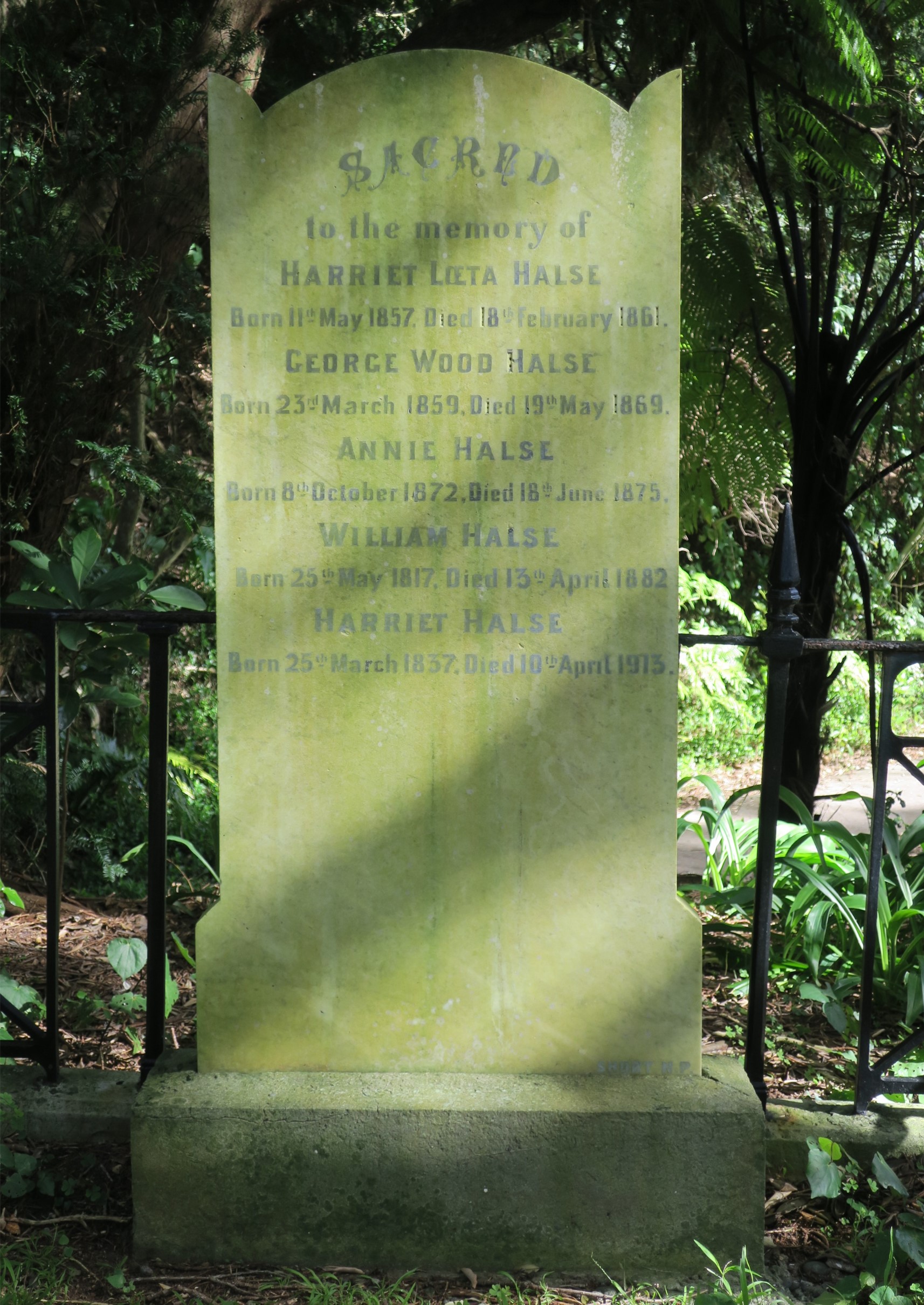
Sadly, Loeta died that same year aged three and George died in 1864, after only five birthdays.
By the 1880s Wiremu’s law firm was in dire straits as a gambling addiction saw him lose thousands of pounds borrowed from elderly clients. Looming bankruptcy coupled with severe depression led the 65-year-old to take his own life on 13 April 1882. He wrote a suicide note, claiming “My head is bursting”, then poisoned himself with strychnine. His obituary in the Taranaki Herald claimed that “he had become the victim of temporary insanity”.
Harriet lived quietly as a widow for the next thirty years, dying in Auckland on 10 April 1913 at the age of 76. She is buried alongside her husband and three of their children in the churchyard of Taranaki Cathedral.
Please do not reproduce these images without permission from Puke Ariki.
Contact us for more information or you can order images online here.


