


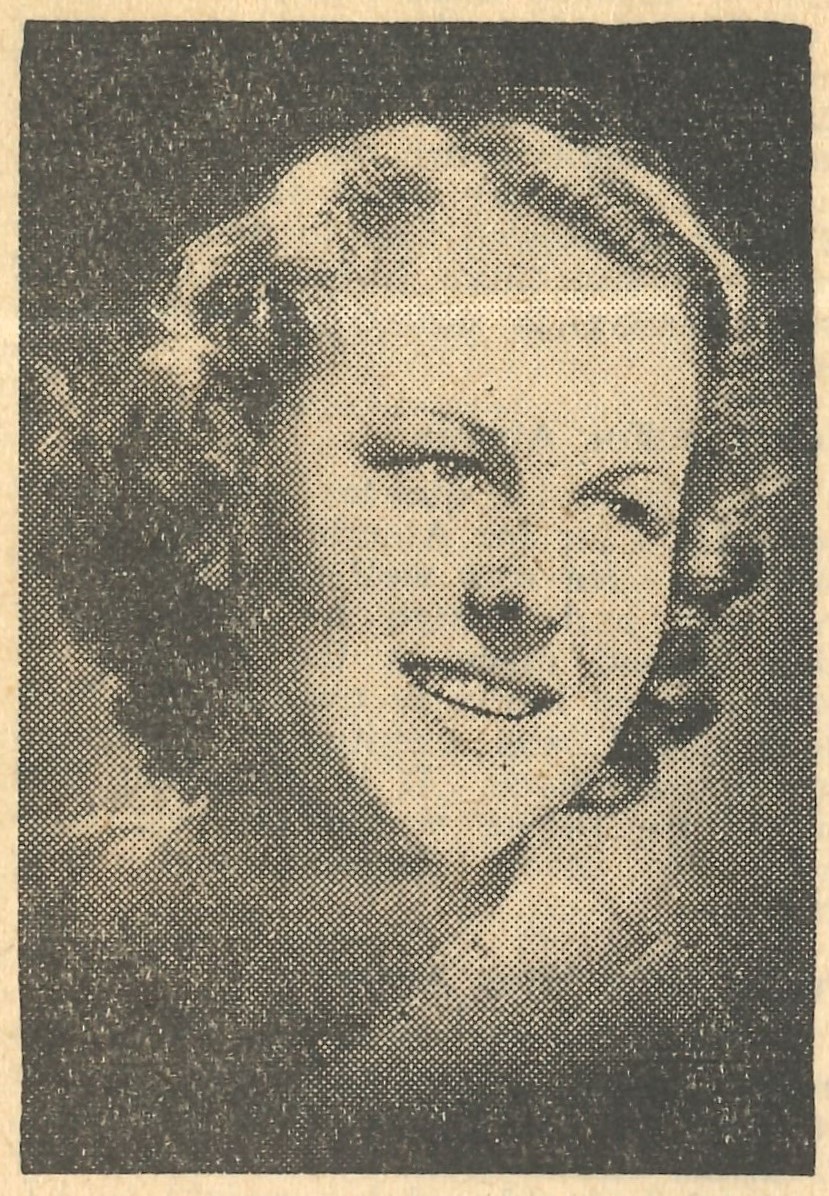
Mary Daphne Woodward, nicknamed Bobbie, was a 20-year-old university student in 1949 when she became Miss New Zealand.
Mary was born in Samoa on 3 July 1928 but grew up in Taranaki, living for a time with parents William and Alice in the villa ‘Maranui’ near Brooklands Park. She was studying French, German and philosophy at university in 1949 and entered the Miss New Plymouth contest in February of that year purely for the £200 prize money. Taking part required undergoing five days of interviews, questionnaires, deportment tests and reading assessments as well as a “motion picture test”. After winning here, she competed in Palmerston North where she beat four other girls to represent the province. Then it was on to the capital for the Miss New Zealand pageant on 18 June.
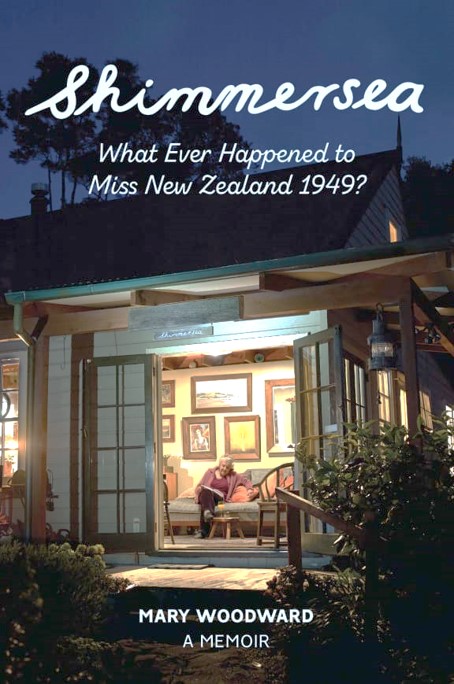
Bobbie described the process in her memoir Shimmersea, written in 2018 to celebrate her 90th birthday:
I met the other 12 contestants in Wellington. Some of them were quite beautiful and all were taller than myself. I decided to regard the whole affair as a rare experience and enjoy my week.
We girls were put up in good hotels in central Wellington and escorted round the city in chauffeur-driven cars. We visited several factories in company with the judges, Miss Nelle Scanlan, a successful novelist, Lady Pōmare, widow of the Māori statesman Sir Māui Pōmare, Mr John Moffett, editor of the Otago Daily Times, and Mr A. R. Kingsford, a well-known photographer. During one outing we took afternoon tea at Parliament Buildings, meeting a number of MPs. I helped myself to a meringue which exploded in my hand but the girls crowded round me to cover up my faux pas.
The judging took many forms:
On several evenings we were invited to join the panel of judges for dinner in their hotel. The first time, faced with an array of cutlery on each side of the plate, some of the contestants hesitated, covertly watching the judges for a lead in what particular knife, fork or spoon to pick up. I, already confident that I was not in the running, went ahead, choosing from the outside first. Could it have been this confidence to act independently in this sort of situation that gave me the edge on the other contestants? I know that I failed to show the sort of sycophantic respect for the judges that some of the other girls were adopting. One night we attended a party at the Shelly Beach Naval Base, and one of the most likely candidates had a few too many drinks, which probably took her out of contention.
We each had several interviews with the panel of judges, being quizzed on general knowledge and attitudes. Then on our last day we had our photographs taken, but I never expected that mine would be blown up in every newspaper in the country over the following days.
Finally the big night arrived:
The final announcement took place in the Wellington Town Hall… I heard afterwards that people all over the country were listening on their radios for the outcome.
The first half of the programme was taken up with a number of entertainers. For the final announcement we 13 girls, all in evening gowns (mine a shimmering turquoise shot with silver…) were seated across the back of the stage while Miss Scanlan gave a witty speech about the process of choosing the right girl… but my mind was elsewhere… when I heard my name called. Surely this was not possible. I must be dreaming…
Bobbie’s win made her an instant celebrity. She was interviewed on radio, filmed for newsreels, gifted a small fortune’s worth of clothes, accessories and makeup, had a camellia named after her and received several marriage proposals. Even the House of Representatives took note when the MP for New Plymouth, Ernest Aderman, offered his congratulations. When Bobbie returned to New Plymouth on 7 July 1949 it felt like the whole city turned out to welcome her home. She claimed to have found it all rather embarrassing:
Met at the airport by quite a crowd including the mayor and mayoress, my family, friends and reporters, there were short speeches and presentation of bouquets. Then I climbed into an open car through confetti and streamers and was driven in a procession of vehicles into the centre of town, where a decorated dais bearing a banner of welcome had been erected in the main street. The itinerary had appeared in the morning paper, detailing where a brass band was to join the procession, which was to take a devious route in order that no spectators were denied the chance to see me riding past in an open car, waving like royalty. What an absurd situation!
Bobbie’s main prize for winning Miss New Zealand was a three-and-a-half-month tour of Great Britain. Acting as a kind of ambassador, she visited factories, coal mines, hospitals, new housing estates, RAF air bases and even met the royal family. Puke Ariki holds a satin evening gown, leather gloves and arctic fox fur stole worn by Bobbie during some of the many functions she attended during her time in the UK.
By 1950 Bobbie was back at university and life had returned to normal. She married Taranaki medical student Peter Swinburn in 1952 and had four children, working as a journalist and later teaching everything from French and sex education to dance.
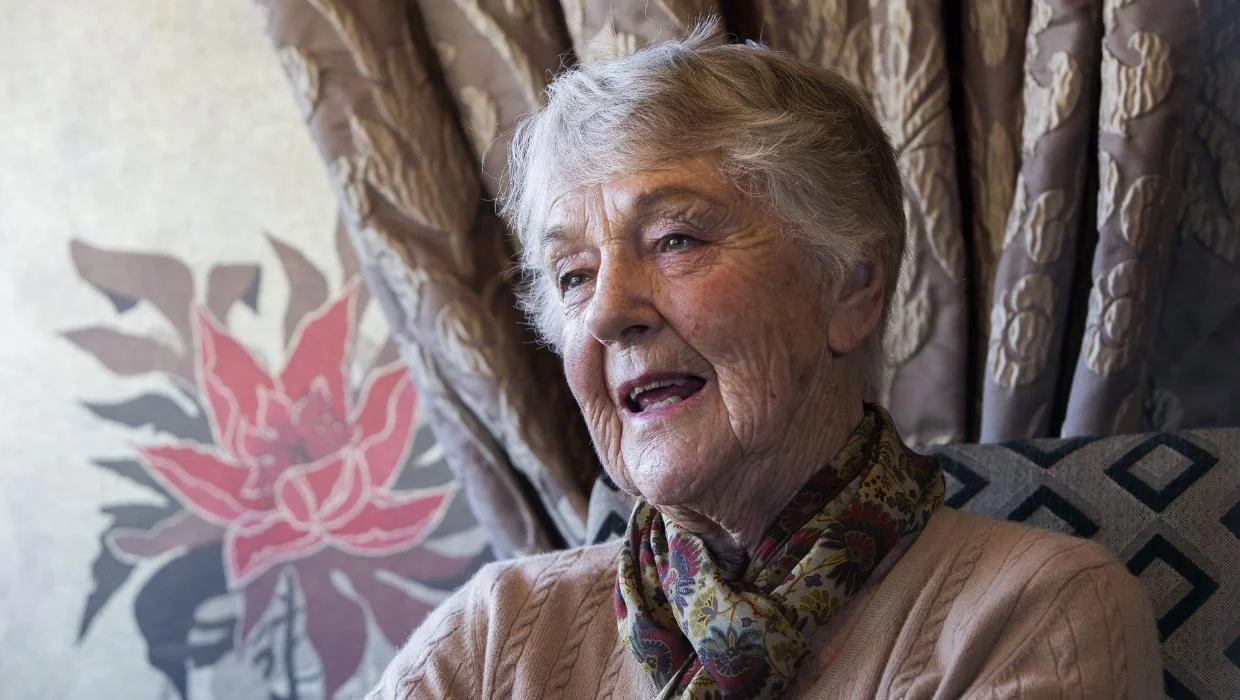
Mary “Bobbie” Woodward died in Auckland on 14 July 2023 at the age of 95, still a beauty.
The life of a former Miss New Zealand: From meeting the Queen Mother to burying two of her children (Stuff Ltd. 23 September 2018)
LinkNational Film Unit footage of Bobbie winning Miss New Zealand 1949 (Archives New Zealand).
LinkImages of Bobbie on her way to Great Britain (Alexander Turnbull Library).
LinkAn interview with Bobbie and other former beauty queens on Max Cryer's talk show "Town Cryer" in 1976 (Ngā Taonga Sound & Vision TVNZ Collection).
LinkPlease do not reproduce these images without permission from Puke Ariki.
Contact us for more information or you can order images online here.


