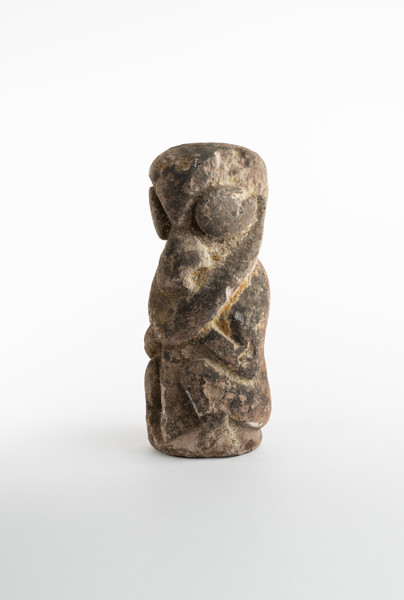
 Taumata atua. Cared for by Puke Ariki (L2019.045).
Taumata atua. Cared for by Puke Ariki (L2019.045).
Taumata atua. Cared for by Puke Ariki (L2019.045).
Taumata atua (resting place of gods) are intricately carved human figures. These mediums represent the gods, particularly that of Rongo the god of cultivated foods. Kūmara was the most important cultivated crop to Māori and taumata atua were placed at the upoko (head of the crop) for protection and to ensure it was fruitful.
After fields were prepared for planting they were made tapu before planting could commence. Planters arrived at sunrise and a tohunga chanted a prayer to Rongo while facing towards the rising sun. When planting commenced tewha (working songs or chants) were sung while men dug the fields.
Once harvesting began, offerings of the first fruits were made to the taumata atua. When crops failed it was thought that the gods were punishing people. They are not many of these beautiful taonga around as they were buried beneath the ground in times of danger and have been unearthed many years later.
This taumata atua is the property of the Ministry for Culture and Heritage. Taonga tūturu is one of nine categories of protected New Zealand objects defined in the Protected Objects Act (1975). The Act regulates the export of protected New Zealand objects, except for taonga tūturu which is the only category of objects to have separate regulations regarding ownership and trade. Under the Act, all taonga tūturu found are initially Crown owned to allow claims for ownership to be heard by the Māori Land Court.
The Protected Objects Act defines taonga tūturu as an object that;
Search the Puke Ariki Heritage Collection
LinkPlease do not reproduce these images without permission from Puke Ariki.
Contact us for more information or you can order images online here.
The information on this website is provided for general research and reference only. While we try to keep content accurate and current, we make no guarantees about its completeness or correctness. It should not be considered a replacement for a LIM or a Property Report. Some content is supplied by third parties. Puke Ariki has not verified this content and users should check its accuracy before relying on it.The inclusion of a building on the website does not imply heritage status. See SCHED1 in the NPDC District Plan for a list of buildings that have rules about what can happen to or around them (administered by NPDC). See the New Zealand Heritage List for a list of buildings that are celebrated for their heritage significance but are not subject to rules (administered by Heritage New Zealand Pouhere Taonga). Should any corrections need to be made to the records or for more information please contact us.


