


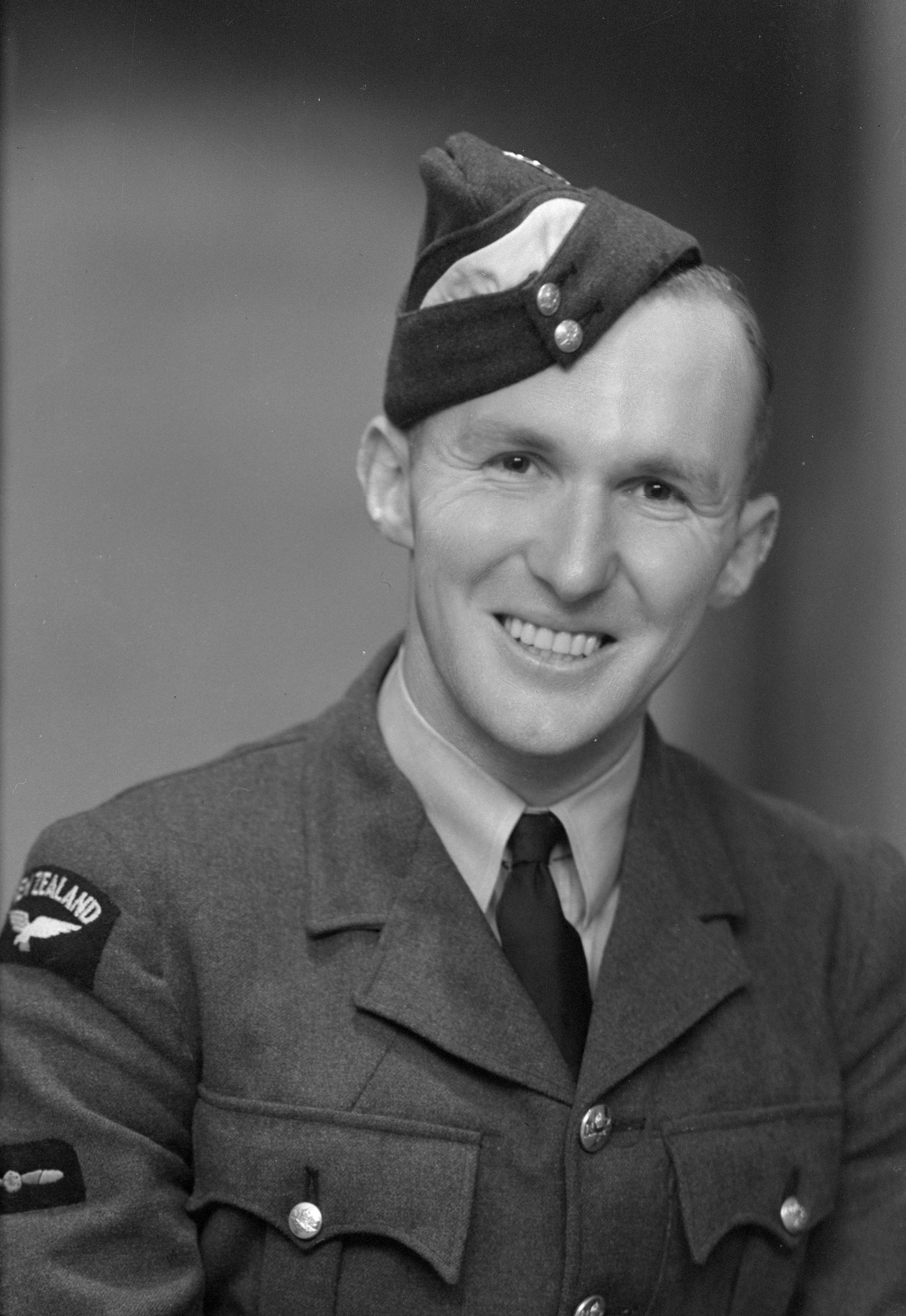
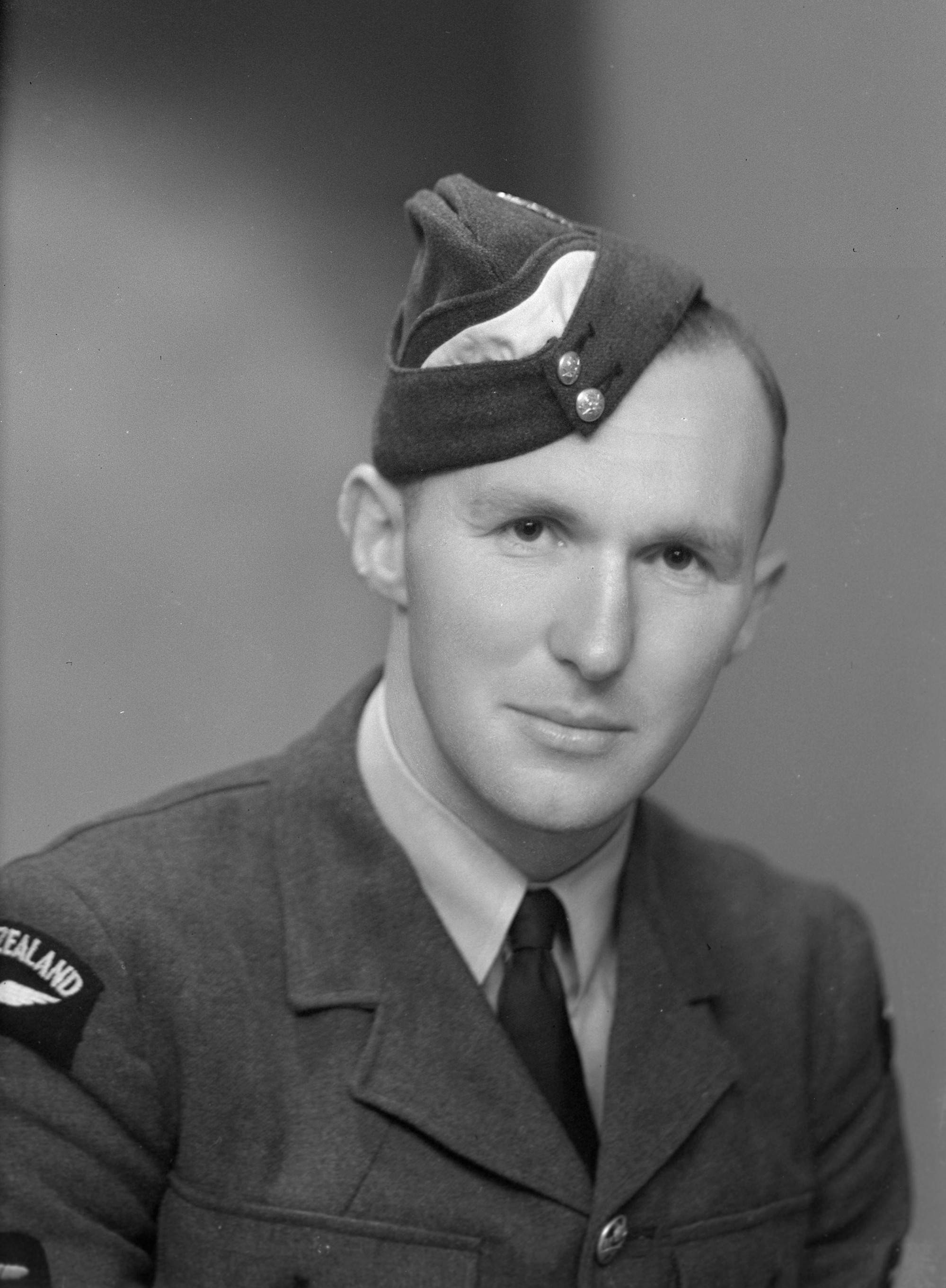
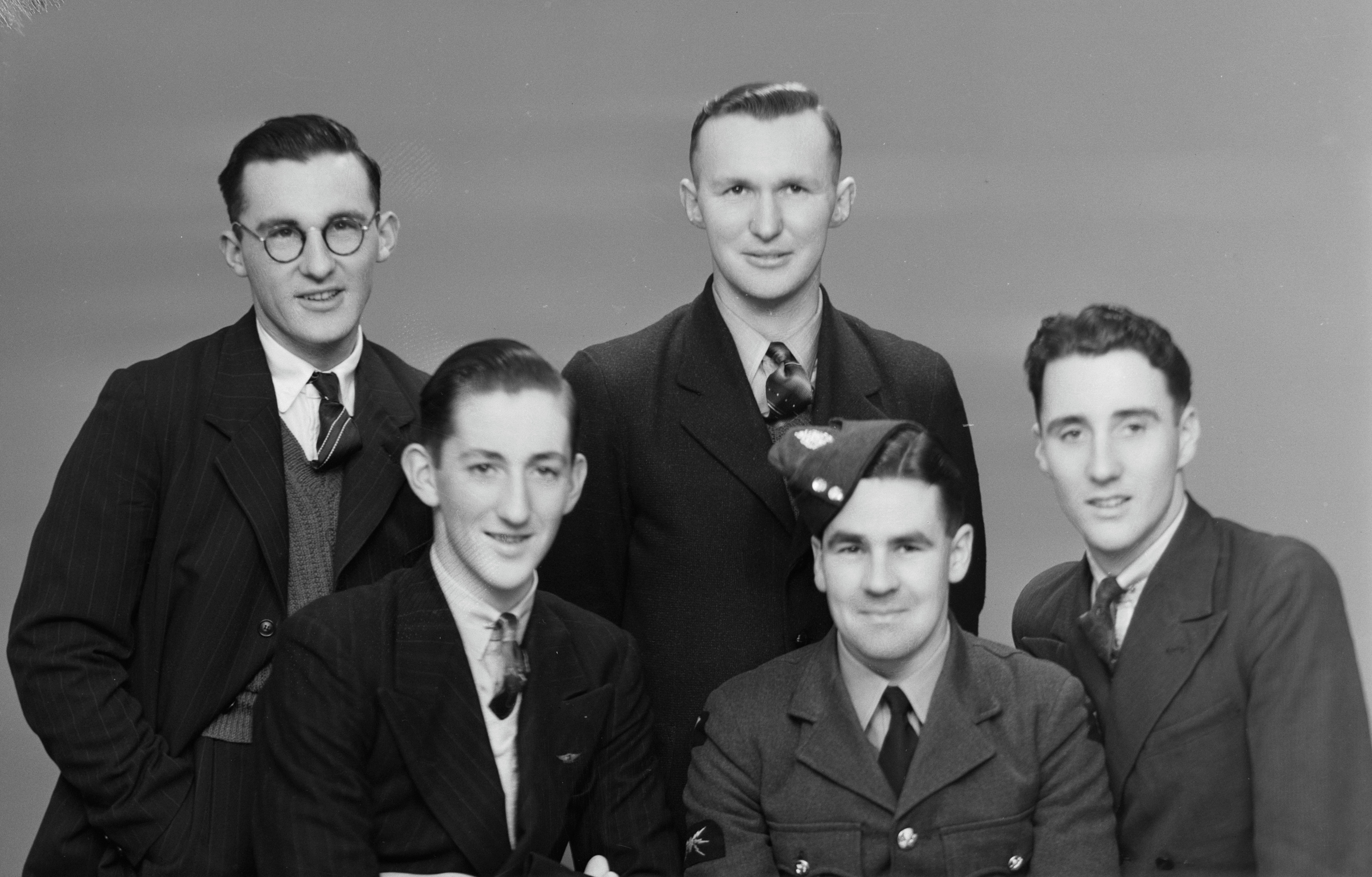
Martin Adam Kilpatrick was born in Bulls on 4 November 1918, the eldest son of Samuel Kilpatrick (1886-1959) and Mary Rose Caroline Kilpatrick (nee Creaven) (1893-1977).
Samuel ran a transport business in Inglewood, trucking livestock and fertiliser around the district, so when Martin left school at the age of 15 he got his carrier license straightaway in order to be able to help his father drive their lorries.
Martin had always loved to fly and was a member of the New Plymouth Aero Club, so when the Second World War broke out it made sense for him to serve with the RNZAF – in an interview recorded in 2009 and held by Puke Ariki, Martin remembered being called up for training on Friday the 13th. His father had actually protested against this in May 1941, telling the Armed Forces Appeal Board in New Plymouth that his son was essential to the family business business not only because he drove lorries and purchased stock but because he was “experienced on the clerical side” too. However, Martin was “keen to serve” so Samuel withdrew his appeal in October of that year, having made other arrangements for the duration of his son’s absence.
Martin practised on Tiger Moths in Ashburton and recalled struggling with all the theory work before being sent to Manitoba to complete his training with the Royal Canadian Air Force at No. 12 Service Flying Training School. After graduating on 3 September 1943, he was based in Cambridgeshire, England with the No. 75 (NZ) Squadron – one of 1370 Kiwis who served with this bomber squadron throughout the war, 422 of whom were killed. Martin flew 35 missions in Lancaster bombers over Germany with the same crew and never lost a man, no mean feat considering that one in three airmen did not survive.
Flights could be as long as ten hours, dropping mines over enemy territory, and were mostly made at night. Although airforce men were better fed than those in the army there were usually only sandwiches to be had on board. The seven-man crew would work for three days then have a day off, spending it in the bar at the base or in a nearby town in an attempt to relax after the stress of their missions. On one flight, Martin had to put the plane into a steep spiral in order to avoid attack, unaware that his navigator was using the toilet at the time, something he admitted later that “he was not very happy about”.
Martin was promoted from Pilot Officer to Flying Officer on 3 March 1944 then to Flight Lieutenant the following year. He was awarded the DFC (Distinguished Flying Cross) for gallantry in action on 1 March 1945 after taking part in an attack against a target in Osterfeld. His aircraft was hit in several places and lost engine power but, according to the London Gazette, Martin “set a splendid example of skill, coolness and devotion to duty throughout” and managed to execute the mission as planned. He then got his plane and crew back to England safely, albeit two hours late, with all the other men at the base crowding onto the runway to watch their triumphant return.
Flight crews were expected to carry out 40 missions if they could, but the introduction of enough new recruits to the base meant that Martin could ‘retire’ after 35 – unfortunately, this meant that he missed out on celebrating with the rest of the men when the end of the war finally came. The 75 Squadron was officially disbanded in October 1945.
Martin met Sylvia Mary Stephenson (1926-2008) while he was in England and they married in Essex on 28 July 1945. He had written her letters every day while they were courting but even after they were married Sylvia was not able to live on the base with her husband. There was no time for a honeymoon but once they got back to New Zealand in October 1945 they were able to take some time off together. The couple eventually had four children: Colin, Anne, Valerie and David.
Martin returned to the family transport business in Inglewood, taking it over when his father died. He admitted in his interview that it was difficult settling back into normal life after his many adventures. He had been encouraged to remain in the Airforce, as a pilot flying peacetime missions, perhaps in the recreated 75 Squadron back in New Zealand, but he preferred to be at home. Perhaps in an attempt to put the war behind him, he only went up in the air a couple more times before giving up flying entirely.
Martin Kilpatrick lived the rest of his life in Inglewood, dying at the age of 92 on 16 July 2011, and is buried in Inglewood Cemetery.
Please do not reproduce these images without permission from Puke Ariki.
Contact us for more information or you can order images online here.
The information on this website is provided for general research and reference only. While we try to keep content accurate and current, we make no guarantees about its completeness or correctness. It should not be considered a replacement for a LIM or a Property Report. Some content is supplied by third parties. Puke Ariki has not verified this content and users should check its accuracy before relying on it.The inclusion of a building on the website does not imply heritage status. See SCHED1 in the NPDC District Plan for a list of buildings that have rules about what can happen to or around them (administered by NPDC). See the New Zealand Heritage List for a list of buildings that are celebrated for their heritage significance but are not subject to rules (administered by Heritage New Zealand Pouhere Taonga). Should any corrections need to be made to the records or for more information please contact us.


